Function and Flow
The Drop Zone Is Becoming Part of the Architecture
Entry storage is moving beyond a row of hooks. The 2026 version integrates bags, shoes, charging, mail, pet gear, and daily reset into one deliberate arrival zone.
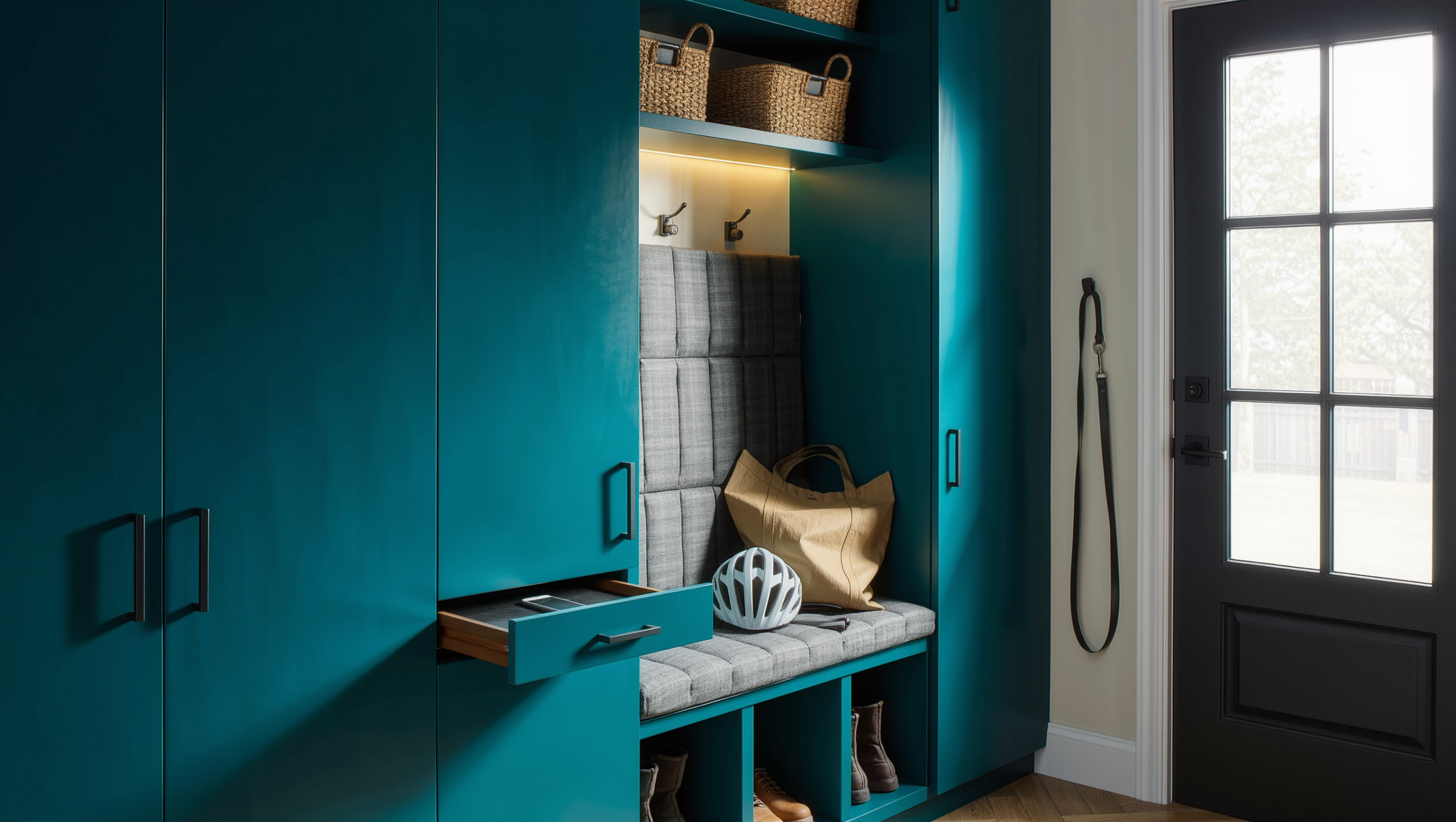
Most clutter does not arrive by teleportation. It comes through the door attached to a person carrying a bag, keys, shoes, mail, a phone, maybe a dog leash, and at least one object they are absolutely going to deal with later.
That is why the entry drop zone is worth building into the architecture rather than improvising. A bench and a few hooks can help, but the stronger version plans for the full arrival sequence instead of hoping everyone suddenly develops excellent habits.
Design for the first sixty seconds home
Watch what happens when someone walks in. Where do the shoes come off? Where does the bag land? Where do keys go? Does a phone need charging? Is there mail to sort? Does a pet need a towel or leash nearby? The drop zone should answer those questions in the order they happen.
This is less glamorous than choosing a runner and much more important. If the house naturally dumps everything onto the kitchen island, the entry is missing a job. If bags pile on the dining chairs, the hooks are too few, too high, too hidden, or nowhere near the route people actually take.
Open storage is fast. Closed storage is calm. You probably need both.
Daily-use hooks, trays, and a bench need to be quick. Backup supplies, seasonal gear, sports equipment, and visual clutter can live behind doors. If everything is hidden, the zone becomes slow. If everything is open, it becomes a merchandise wall for household logistics.
The balance depends on the household. One person may need a bowl, two hooks, and somewhere to kick off shoes. A family with backpacks, sports bags, winter layers, dog gear, and school papers needs more capacity and clearer ownership. The pretty little row of three pegs may not be up to the assignment.
Charging is the category that most often gets this balance wrong. A concealed outlet, a shallow drawer or a dedicated shelf will keep phones, earbuds, watches and batteries off every horizontal surface in the house, but only if the point is reachable, ventilated and big enough for the devices that genuinely live there. Hide it too well and everybody ignores it and goes back to the kitchen counter. Storage only works when the convenient choice and the intended choice are the same choice, and that is a design problem, never a discipline problem.
The walking line wins every argument
The entry still has to be an entry, which means storage gets overruled by the walking line. A deep bench, an open cabinet door, a shoe pile or a bag hook must not narrow the route to the point where people enter sideways. Measure the path first and assign storage to whatever is left, in that order, because it cannot be done the other way around. Every entry that fails does so by borrowing a few inches from the walking line for a piece of joinery, and nobody ever gets those inches back — they simply stop noticing that arriving home involves a small negotiation with a bench.
In a narrow hall, go vertical and shallow. In a larger mudroom, you can afford deeper lockers, a real bench, drawers, and closed upper storage. In a rental, a freestanding cabinet, rail with hooks, baskets under a bench, and one tray can create the same logic without pretending the wall belongs to you.
Please let the entrance look like part of the house
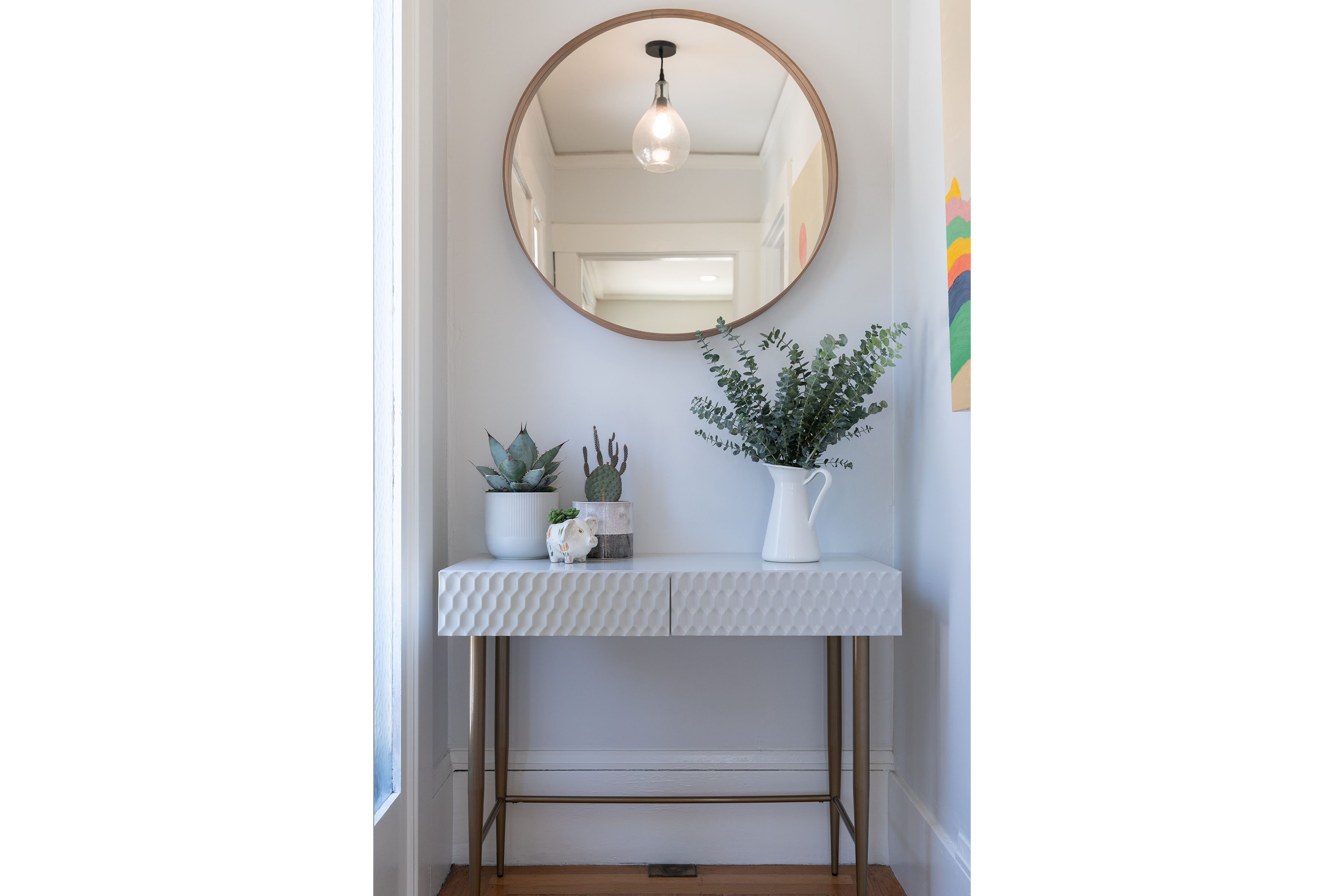
Functional storage does not have to look institutional. Paint the cabinet the wall color and let it disappear, or go the other direction with lacquer, dark wood, interesting hardware, patterned wallpaper, a strong runner, or one unapologetic light fixture. The entry is the first room people experience. Utility is not a reason to make it visually apologetic.
A good drop zone does not make anybody tidier. Nothing does. It gives the untidy part of arriving a proper place to happen, three feet from the door, where it was always going to happen anyway — and then it lets the rest of the house get on with being a house instead of a holding area for backpacks.
Same problem, elsewhere in the house
Room notes
Keep the room on the record.
One useful note at a time: what to test, what to ignore, and what changed when the room got another vote.