Function and Flow
Hidden Storage Is Better When You Can Still Find Your Stuff
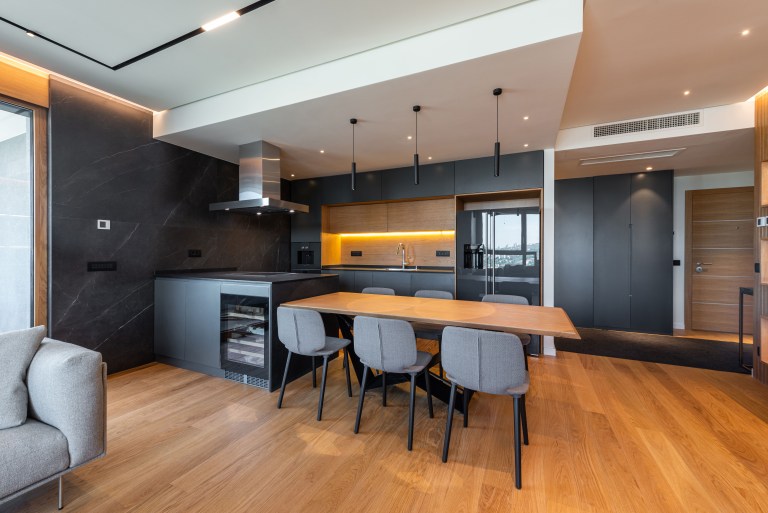
Integrated storage is surging in 2026, from concealed cabinets to hydraulic lifts and paneled appliances. The trick is hiding visual noise without hiding daily life from the people who need it.
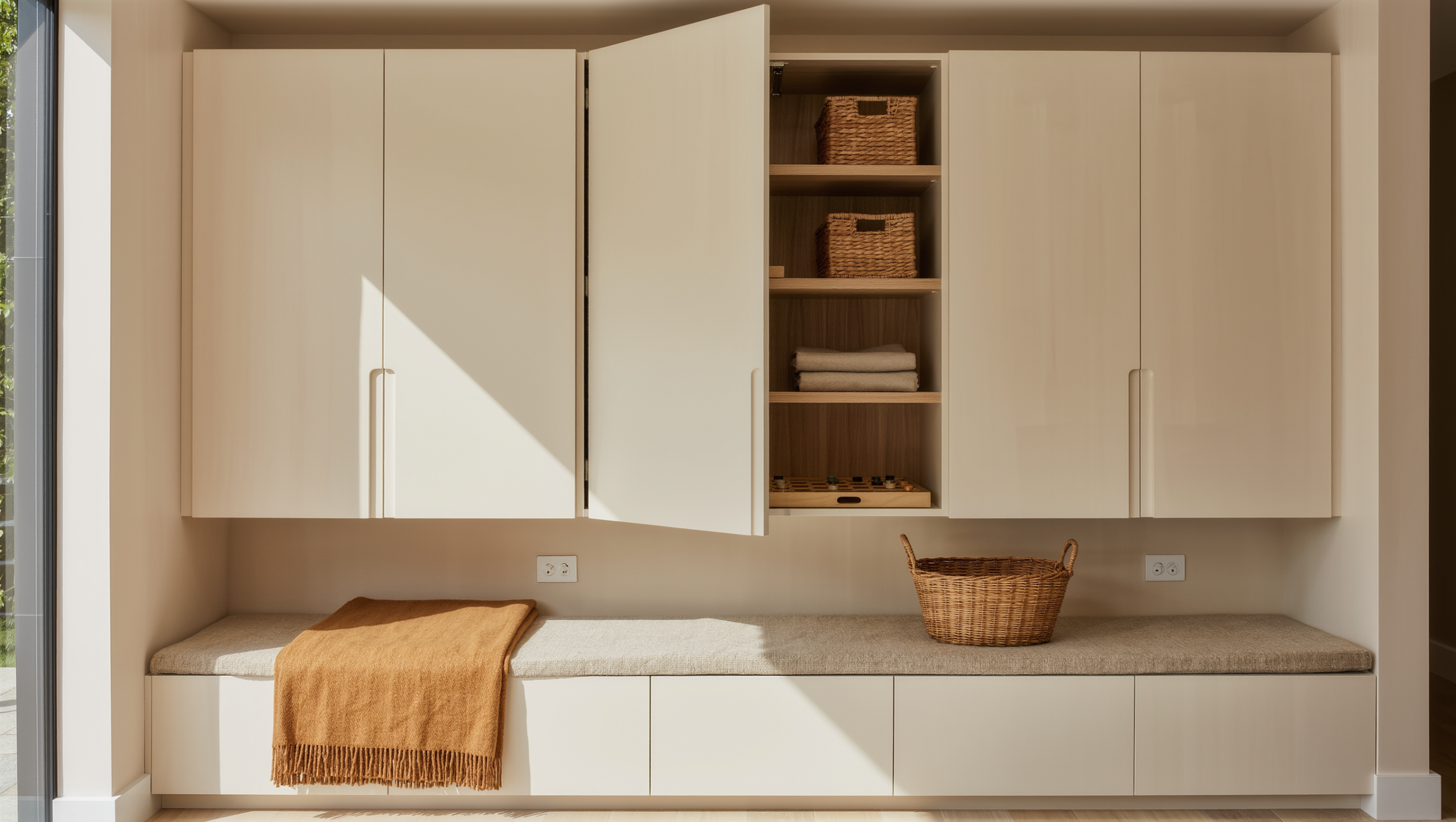
Hidden storage has acquired the kind of prestige usually reserved for secret passages and very expensive refrigerators. Doors disappear into paneling. Appliances vanish behind cabinetry. Charging stations retreat into drawers. Entire sections of kitchen can close up and pretend breakfast never happened.
The appeal is obvious. Visual calm is useful. But there is a point where seamless becomes cryptic, and nobody should need a treasure map to find the toaster.
Hide the noise, not the routine
Small appliances, cables, backup supplies, cleaning tools, and occasional-use equipment are good candidates for concealment. Daily essentials need quicker access. A cabinet that looks perfect closed but requires two doors, a lift, and a negotiation every morning has swapped visual clutter for a tiny obstacle course.
The better question is not, “Can this disappear?” It is, “Should this disappear?” If a family uses the coffee machine six times a day, burying it behind a sequence of beautiful panels may create more friction than calm. If the same cabinet hides the blender, mixer, backup paper towels, and the stack of serving platters that come out twice a month, the concealment starts to earn itself.

The mechanism then has to survive actual people. Pocket doors, bifolds, pullouts, lifts and appliance garages are useful when they remove conflict from a room, and each one has a specific way of failing. The door has to go somewhere when it is open. The shelf has to be reachable once it is. The mechanism eats interior capacity, sometimes a surprising amount of it. And when it breaks, it can leave you locked out of the very thing it was built to protect.
Picture the cabinet on an ordinary weekday morning rather than in a reveal photograph. Somebody will leave the door open all day because closing it is a nuisance. A lift will need to move before another drawer can open. The beautiful pocket door will be occupying the exact wall depth that would have made the shelving useful. Good storage reduces the number of small household negotiations. It should not be inventing new ones.
Where hidden storage changes the room most
Concealment has the most impact where one room is visible from another. Open kitchens, living rooms with media equipment, entry zones, bedrooms with work areas, and small apartments all benefit when utility can recede after use. The eye gets a calmer field, which gives stronger materials, art, color, and furniture more room to matter.
Hidden storage can support a more dramatic room for exactly this reason. A deep plum wall reads more beautifully when it is not competing with chargers, printer paper, dog supplies, and a router blinking from a shelf. Concealment does not have to make a room minimal. It can make the things you want to see feel richer because the visual static has somewhere else to go.
Scale the idea to the space you actually have
You do not need custom millwork to get the benefit. A curtain can hide an open utility niche. A freestanding cabinet can absorb office equipment. Matching boxes can turn an open shelf from visual noise into one readable plane. In a rental, furniture with doors often does more for calm than another round of tiny organizers.
At the higher-investment end, built-ins can integrate media, appliances, charging, laundry support, or whole-house storage. The principle stays the same: access first, capacity second, visual calm third. If those arrive in the wrong order, the room may look expensive and still be irritating.
Good hidden storage makes the room easier to use and quieter to look at. Bad hidden storage simply moves the clutter behind a more expensive door.
A room should not look afraid of objects
That is where I want to end, because this trend has a direction of travel and it is not one I entirely trust. Paneled walls can be elegant. They can also become a large beige sentence with no punctuation. Hidden storage does not require hiding every seam, handle or material change. Sometimes the cabinet should look like architecture. Sometimes it should look like a beautiful cabinet, with a handle on it, that anybody can find.
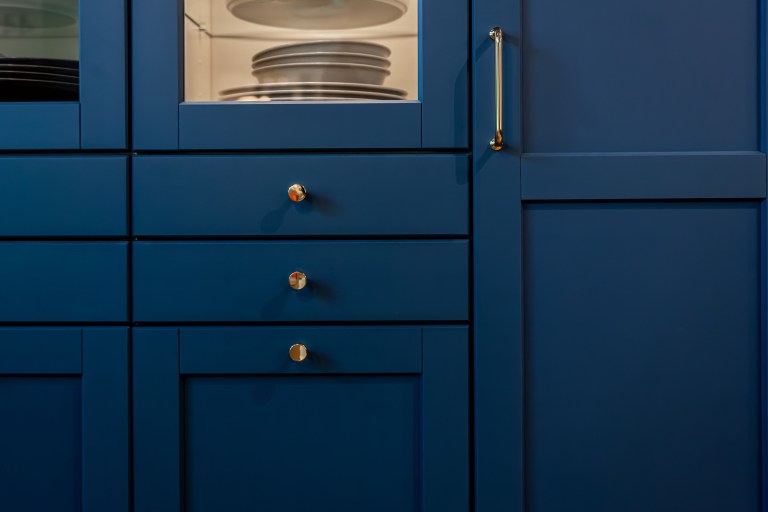
If the room wants lacquer, fluting, dark paint, brass pulls, dramatic grain or a strange little latch, use it. Storage can be integrated without pretending it does not exist. This site is pro-calm exactly where calm improves the composition, and not one inch further — a house that has erased every trace of being used has not achieved serenity. It has achieved deniability, which is a very strange thing to want from your own kitchen.
Same problem, elsewhere in the house
Room notes
Keep the room on the record.
One useful note at a time: what to test, what to ignore, and what changed when the room got another vote.