Function and Flow
The Daybed Is Back Because Sofas Keep Blocking the Room
The daybed is a 2026 living-room status piece with an actual job: low, open-backed seating can divide a large room, connect two conversation zones, and keep sightlines intact where a sofa would become a wall.
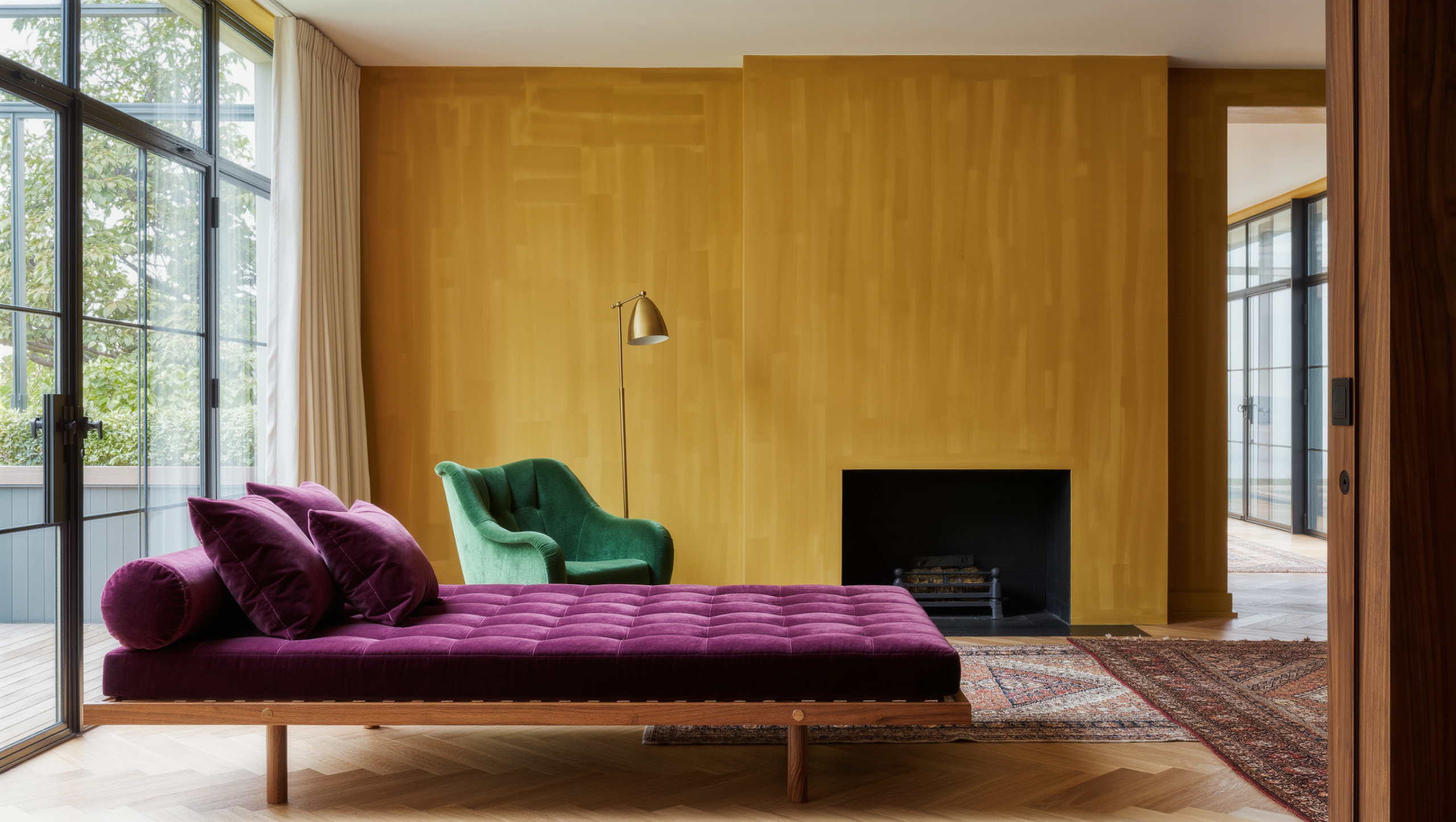
The daybed is back, which sounds vaguely like we are all expected to recline dramatically at four in the afternoon while someone brings correspondence on a silver tray.
I am willing to hear it out.
In a large living room, a daybed can do something a conventional sofa is often terrible at: create an edge without creating a wall. It sits low. It usually has little or no back. You can approach it from more than one direction. It can belong to two seating zones instead of turning its back on one of them.
That makes the current daybed revival more interesting than a furniture trend. It is a room-planning tool.
Where a sofa would build a barricade
A floating sofa is excellent at defining a zone. It is also a fairly substantial visual object, especially when the back faces an entry, dining area, window, or second conversation group.
A daybed can occupy that same dividing line while keeping the view open. Place it perpendicular to the main sofa, between living and dining, in front of a window that should not be blocked, or along the edge of a secondary seating area. The room gets structure without suddenly acquiring an upholstered barricade.

Most seating declares allegiance. The chair faces the fireplace. The sofa faces the television. The bench faces the table.
A backless or low-backed daybed can be used from either side. On a quiet evening somebody stretches out facing the main seating group. At a party, guests perch from both directions. In a room with two conversation clusters it becomes the diplomatic border crossing, and that is a job no sofa on earth can take, because a sofa has a back and a back is a decision about who matters.
Some of these are platforms for people with excellent posture
A large room makes undersized furniture look apologetic within about a week. The daybed needs enough visual weight to hold its position against the main sofa, the rug, the fireplace, the architecture. That can come from length, upholstery, a substantial base, sculptural form, or a textile with some authority. It does not have to be bulky. It does have to look as though it knew the room was big before it arrived.
Presence is the easy half, though, and it is the half the photograph sells. Some daybeds are genuinely comfortable. Some are beautiful upholstered platforms designed mainly for photographs and people with excellent posture, and you will not be able to tell which from any image ever taken of one.
Sit on the piece before committing, if there is any way to do it. Check the seat height against the furniture it will live beside, the depth against the way you actually intend to use it, and whether getting on and off feels natural from both of the sides it is supposed to serve. If it will double as occasional sleeping space, treat that as a separate requirement entirely. Nothing about the word daybed guarantees a good bed.
Twelve pillows and nowhere to put a drink
There is a particular decorative crime in which a daybed is covered with pillows until the only available seat is a six-inch strip beside a bolster. Use enough cushions to make lounging comfortable and enough restraint that a person can sit down without relocating an installation. If the piece works from both sides, the styling has to be balanced and easy to move, not one permanent pillow wall built against the side nobody photographs.
The other half of the sabotage is the missing surface. A daybed is excellent for cocktails, books, conversation, pets, naps, and staring into the middle distance, and every one of those activities eventually produces an object that needs somewhere to land. Without a surface within arm’s reach, the object lands on the floor, and after the third time it happens the daybed quietly stops being used in the evening.
A small movable table, a nearby cocktail table, or a narrow surface at one end usually beats forcing a full coffee-table arrangement around it. The piece is already doing unusual spatial work. Do not trap it inside a conventional furniture formula because the catalog page showed one.
Leave it on the seam
Our piece on multiple seating groups makes the larger argument: oversized living rooms are often better with more than one scale of conversation.
The daybed belongs on the seam between them. Give it a tiny rug, a tiny side table, a tiny lamp and a ceremonial zone of its own and you have not connected anything — you have opened another franchise location, and the room now has three half-committed places to sit instead of two good ones.
Placed properly it does something almost nothing else in a living room does: it creates a boundary, adds seating, and preserves the sightline, all at once. The room comes out more furnished and less blocked, which beats buying a second sofa because there was technically space for one.
Heard, then, and upheld. Not for the reclining or the correspondence. For the fact that it is the only large piece of seating in the catalog that does not make you pick a side of the room.
Research note: House Beautiful called the daybed a 2026 living-room status symbol and continues to feature it as a low-profile seating option for rooms where a conventional sofa can block space or sightlines; current living-room trends also favor multiple conversation areas and more social layouts. Sources: House Beautiful daybed guide and 2026 living-room trends.
Same problem, elsewhere in the house
Room notes
Keep the room on the record.
One useful note at a time: what to test, what to ignore, and what changed when the room got another vote.