Function and Flow
Ilse Crawford: The Person Has to Win
Ilse Crawford is useful to study because human-centered design is not a look. It begins with behavior, comfort, light, sound, touch, social use, and measurable daily consequences.

Sit in the chair the room expects you to sit in. If it’s sculptural and uncomfortable, the concept has already lost — no matter how the photograph turned out. That’s the whole case for Ilse Crawford belonging in this series: Room for Drama cannot become an excuse for making people subordinate to the room. People are not visual clutter.
Studioilse frames design around human experience — what people need physically, emotionally, socially, and sensorially from a place — before a visual signature gets imposed. It sounds less theatrical than the rest of this series. It may be the principle that keeps the theater honest.
Behavior comes before image
Who uses the room, how long do they stay, do they gather, work, recover, or move through quickly — those questions affect layout before they affect styling. A workspace built for concentration needs different light and sound from a room built for conversation; a dining room should account for the distance between chairs and what happens when people stand up. Observation isn’t glamorous, but it prevents glamorous mistakes.
Comfort sounds vague until it’s translated into consequences: a chair supports the body or it doesn’t, a room allows conversation without shouting or it doesn’t, a route forces a detour or it doesn’t. That’s a more demanding standard than calling a room cozy — it asks the design to perform. A room can be visually ambitious, but ambition isn’t a waiver for bad ergonomics.
A hotel with no back of house
Ett Hem, which Studioilse completed in Stockholm in 2012, shows what that principle costs when somebody actually means it. A former Arts and Crafts house became a twelve-bedroom guesthouse, and the decision that makes it worth studying is not a material or a palette. The studio removed the division between front of house and back of house. Guests are not steered away from the kitchen. Staff do not vanish through a concealed door carrying a tray.
That separation is not built for amusement, and deleting it is not free. It exists so service failures happen out of sight, so staff can move at speed, so nobody watches a plate being assembled. Delete it and everything has to be good enough to be seen — the storage, the sequence, the dishes, the noise, the manner of the person doing it. That is the most expensive kind of honesty available, and it is the sort of decision that reads as soft in a press release and is brutally operational in practice.
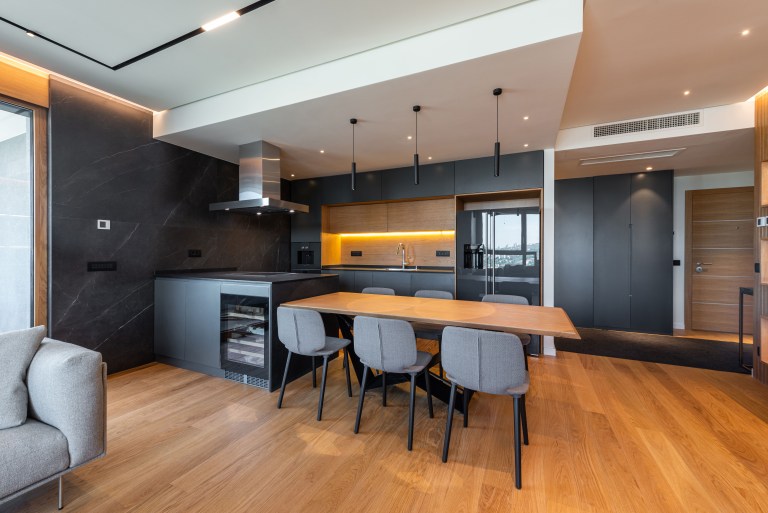
The domestic version is smaller and nearly as revealing. Most kitchens are designed as back of house, and most open-plan kitchens are back of house with the wall taken down, which is why they quietly drive people mad. If you can see it from the sofa, it is front of house now, and it needs the systems of a room people look at: somewhere the mess is allowed to live, a light level that serves both jobs, and a run of surface that is permitted to be empty once dinner is over.
The senses can name the actual problem
Light, acoustics, tactility, and temperature usually get collapsed into “atmosphere,” but they’re specific enough to diagnose. Glare is different from brightness. Echo is different from energy. A cold metal surface produces a different bodily response than worn timber. Sensory design is doing real work when it solves one of those conditions, not when it becomes a paragraph about wellbeing next to three houseplants.
Materials should be judged the same way — through the body, not the product description. “Natural” isn’t automatically comfortable or durable. What matters is how a material actually behaves in the room: how it feels, ages, cleans, and meets skin. A beautiful stone can be cold and slippery exactly where that matters.

The floor plan is already suggesting behavior
Seating distance, thresholds, and places to pause shape interaction whether or not anyone planned it that way. People talk more where chairs support conversation, and they avoid a room that exposes them without a defensible place to settle. Ask what the layout is encouraging before deciding whether you like how it looks from the doorway.
This also reframes luxury. Value doesn’t only show up as rare material or polished finish — it can be excellent light, a chair that invites a long stay, or a route with no friction in it. That’s a more generous definition because it’s experienced rather than merely recognized, and a modest room can borrow it just by making the daily action easier.
Human-centered is not a style
This is the point that matters most for Room for Drama: people-first design doesn’t require quiet rooms, rounded everything, or oatmeal upholstery. A room can be saturated, theatrical, and highly decorative and still be human-centered, as long as the visual expression supports the intended use. The weak version substitutes a visual language — natural materials, soft lighting, a plant as evidence of wellness — for actual observation, and none of those choices automatically fix glare, noise, or bad circulation. Human-centered design is harder precisely because it can force you to admit the attractive solution is wrong for the people using it.
The test worth running in any room you already trust: sit where people are meant to sit and check the light and reach. Walk the daily route and count the detours. Clap once and listen to what the room does with the sound. Then test it again after dark, because comfort that only shows up at noon is staging with a nicer blanket.
Source: Studioilse’s profile of Ilse Crawford and description of its work, including its project page for Ett Hem, the twelve-bedroom Stockholm guesthouse it completed in 2012 in a former Arts and Crafts house; Vitra’s interview with Crawford; Architectural Digest’s Studioilse profile.
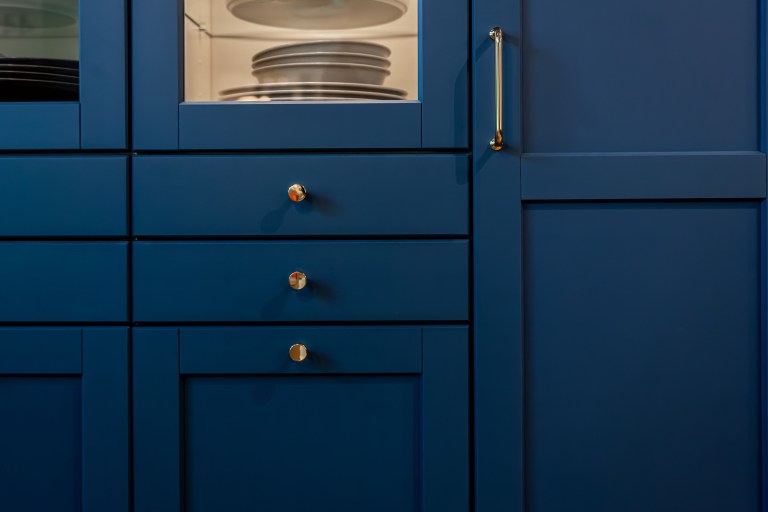
Designer study. This concise study is part of Designers Worth Studying, the deeper Room for Drama index for what to borrow, what not to copy, and how each idea survives an actual room. Photographs in this series are Room for Drama’s own illustrative images, not photographs of the studio’s projects.
Same problem, elsewhere in the house
Room notes
Keep the room on the record.
One useful note at a time: what to test, what to ignore, and what changed when the room got another vote.