Light and Atmosphere
Your Rental Should Feel Different at 9 P.M. Than It Does at 9 A.M.
Use sensory design in a rental through layered light, acoustics, texture, temperature, and restrained scent so the room changes with the day.
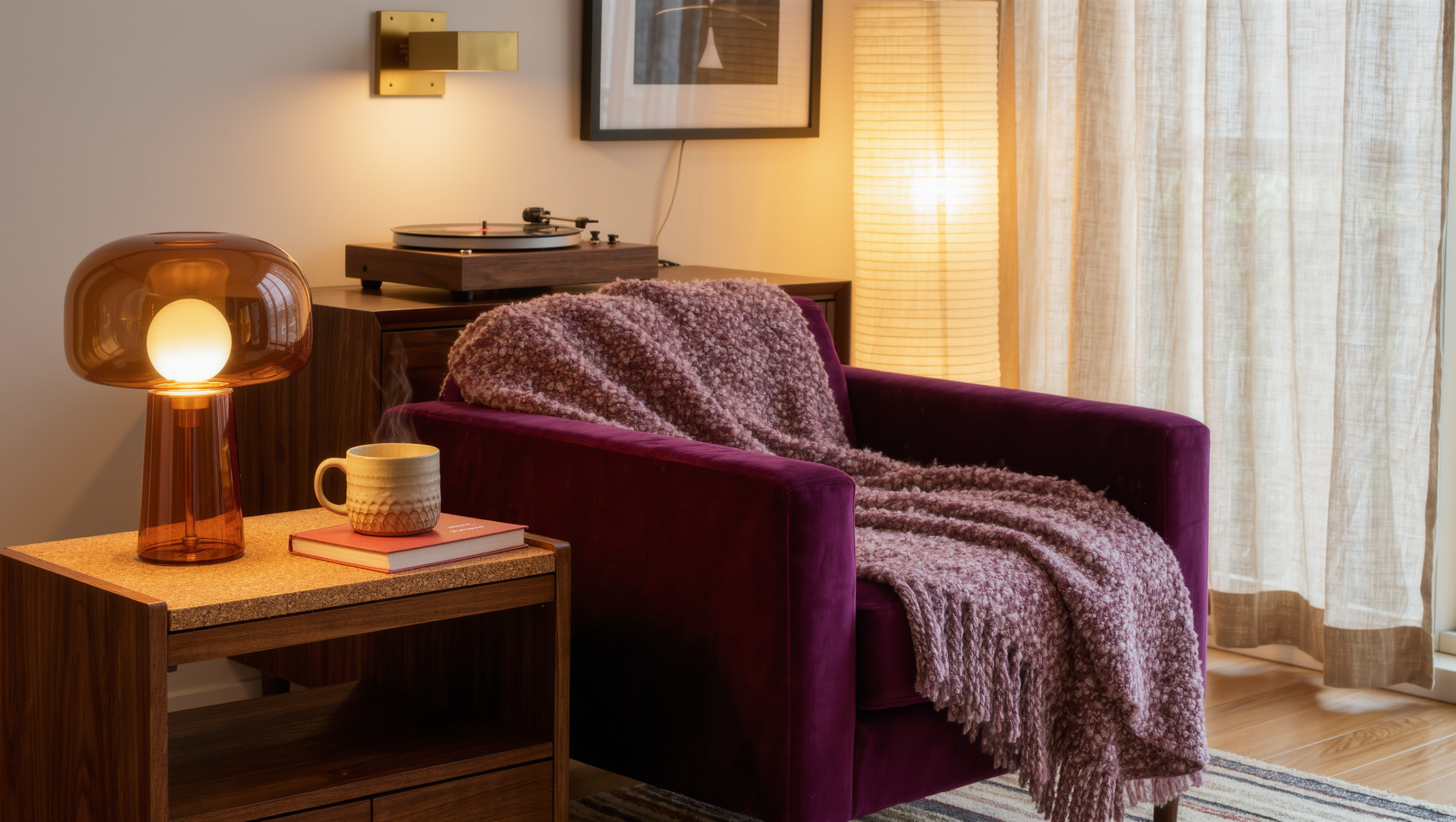
One of the more useful design shifts in 2026 is that people are finally talking about rooms as experiences instead of photographs. Houzz reports calming searches up 139%, wellness rooms up 164%, biophilic design up 112%, and sensory rooms up 43%. The language can get very spa brochure very quickly, but the idea underneath it is solid: a room should do more than look acceptable from the doorway.
This is how I think about rooms anyway. I want to know what happens when you sit down, when the sun goes away, when someone turns on the television, when the window starts leaking cold air, when you are tired and just want the room to cooperate. Most of what actually moves the needle here is portable, which is the only reason this is worth a renter reading rather than a category to be envious of—lamps, rugs, curtains, upholstery, speakers, shades, bedding, screens, and arrangement.
Design the morning room and the evening room separately
A room does not have one identity all day. In the morning, daylight may be the main event. At night, the same room can flatten into one ceiling fixture and a glowing television unless you give it another plan.
Walk through the room at the times you actually use it. What needs to be bright? What can disappear? Where do you want to sit? What glare shows up on the screen? Which corner becomes a black hole? I would rather answer those questions than declare the room cozy and buy a candle.
Light should change height as the day changes

Daylight usually comes from above and the side. Evening light gets better when it drops lower. Table lamps, floor lamps, plug-in sconces, and other appropriate portable sources can create small pools of brightness instead of one flat blast.
Use brighter task light where the activity requires it and let the rest of the room calm down. Lighting is the deeper system if your apartment currently has two settings: cave and interrogation. Neither is a mood.
Sound is part of the floor plan
Hard rentals can sound as temporary as they look. Bare floors, empty walls, metal blinds, and sparse furniture bounce sound around until every conversation feels slightly public.
Rugs, curtains, upholstered furniture, books, fabric screens, and other soft surfaces can reduce some of that hard reflection. Placement matters. Put softness near the activity making or receiving sound instead of decorating the opposite end of the room and hoping acoustics are feeling cooperative.
Touch needs contrast, not a room full of fuzz
A room full of soft things is not automatically sensorial. It may simply be fuzzy. Texture becomes more noticeable when materials disagree: cool metal beside rough wood, linen beside lacquer, wool underfoot beside smooth upholstery, matte ceramic near glass.
Put those differences where people encounter them naturally. The arm of a chair, the rug under bare feet, the curtain you open every morning, the table edge you touch every day. I like sensory design when it follows behavior. Otherwise it starts to feel like a display about sensory design.
Scent should be background, not an announcement
If you use fragrance, treat it as optional and household-specific. Ventilation, allergies, sensitivities, pets, children, lease rules, and personal tolerance all matter. More scent is not more atmosphere.
Fresh air, clean textiles, open windows when conditions allow, and removing the thing that actually smells bad are design moves too. No candle can successfully negotiate with a damp rug, and I refuse to ask one to try.
Temperature and drafts count because they change behavior
If everyone avoids the window seat because it is freezing, the reading nook is decorative fiction. If the bedroom overheats under a heavy layered canopy, the atmosphere has lost the plot.
Use appropriate window treatments, furniture placement, bedding, fans, and portable climate tools where permitted and safe. Do not block radiators, vents, heaters, returns, or other required building systems just because the curtain photographs better that way. The room has to work for the body that lives in it.
Build one sensory destination before redesigning the whole apartment
Pick the chair where you actually sit, the bedside area, the bath routine, the desk, or one corner of the living room. Give that spot the right light, a comfortable surface, less visual noise, better sound, and whatever small ritual makes it useful.
Then live with it. I am a big believer in going all in once the idea earns it, but not every apartment needs a dedicated wellness room. Sometimes it needs one corner where the sensory conditions finally stop arguing with you. Scale the idea before you build a shrine to it.
Only then is it worth automating anything. Smart bulbs, timers, speakers, and scenes can be useful, but technology cannot decide what the room should feel like. Figure out the light levels, activities, and sequence first. Then automate the repeatable part if it makes life easier.
A relax scene with six badly placed lights is still six badly placed lights turning on together. Technology is excellent at repeating a decision. It is not excellent at making the decision for you.
Not all of it is a decorating problem
The search numbers will not tell you this part. A good share of what gets sold as sensory design is a lighting problem with a candle standing next to it. A smaller but real share is a building problem no object can reach: thin walls, one north window, forced air that starts up like a runway, a floor that is cold from October. Those are not failures of styling, and they will not yield to a diffuser.
Knowing which is which saves money, and it saves the particular deflation that comes from buying the recommended object and feeling exactly the same afterward. Light, layout and soft surfaces will fix a surprising amount. What is left is the building, and the building is not yours. Design the evening version of the room out of what you can actually move, and let the rest be the landlord’s shortcoming rather than a verdict on your taste.
No single aisle sells atmosphere. It turns up when the room’s light, material, sound, temperature, and behavior finally agree with one another, which is usually around the time somebody switches off the landlord’s ceiling fixture and leaves it off.
Source note: Houzz’s May 2026 U.S. search report showed strong growth in wellness, calming, biophilic, and sensory-room searches, alongside tactile materials and low-voltage lighting. Houzz, 2026 U.S. Emerging Summer Trends Report.
Same problem, elsewhere in the house
Room notes
Keep the room on the record.
One useful note at a time: what to test, what to ignore, and what changed when the room got another vote.