Function and Flow
Fake the Architecture, Not the Damage.
Create renter-friendly architectural detail with curtains, molding, wallpaper, panels, and hardware—while planning permission, stability, and removal.
On this page
8
Rentals often have the spatial personality of a shipping box because the architecture was designed to offend nobody. No trim worth mentioning. No interesting wall depth. No built-in rhythm. Then the internet responds with a thousand renter-friendly products that promise instant Parisian paneling before lunch.
I understand the temptation. I am the person who looks at a dead area and immediately wants to know what it could become. But removable architecture only works when the removal is part of the design from the beginning. Otherwise the dramatic before-and-after just moves the problem to move-out day.
Create the architectural read before you imitate the material
What does the room actually lack? Vertical rhythm? A focal wall? A boundary between sleeping and living? A frame around the bed? More height at the window? A stronger entry?
Name the missing spatial effect first. You may be able to get it with a curtain, screen, tall cabinet, art grouping, bookcase, or change in lighting instead of attaching decorative strips to every wall because a video had dramatic music. Drama is welcome. It should just be attached to a problem the room actually has.
Full-height curtains are fake architecture in the best way
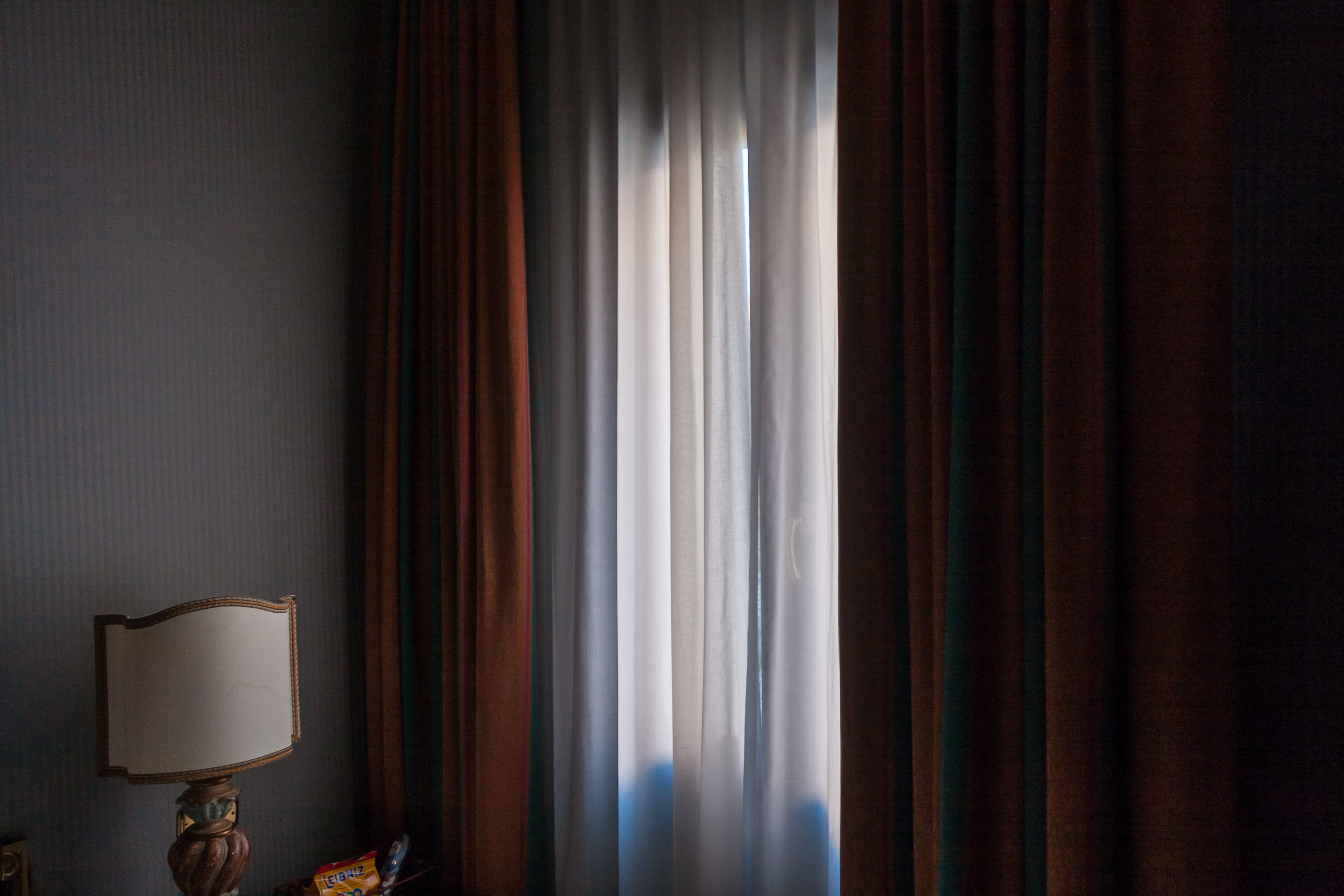
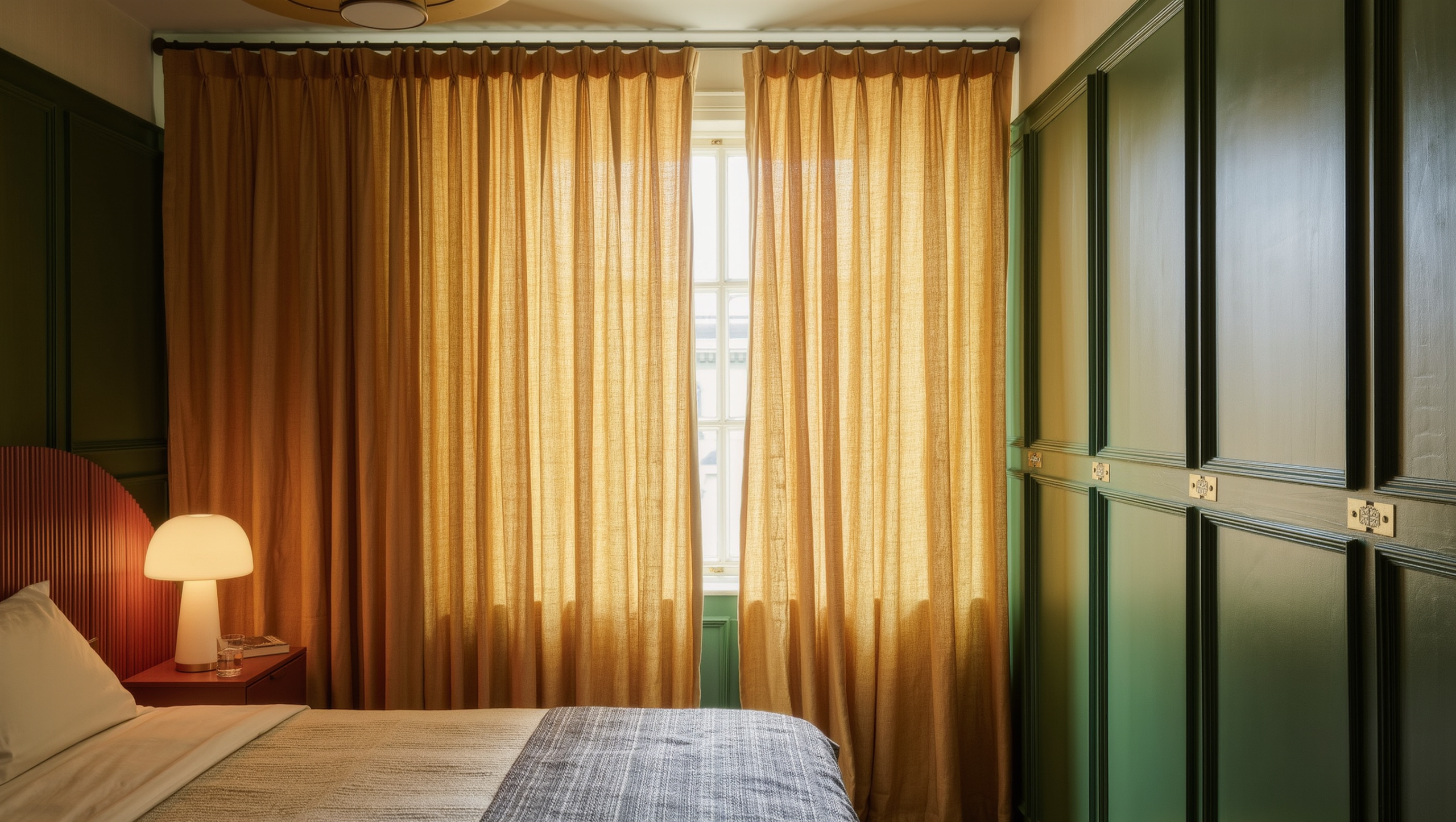
Curtains can make a window read taller, soften a wall, hide an awkward opening, create a sleeping zone, or turn a blank plane into a vertical color field. They are one of the rare design elements that can change proportion, acoustics, light, and privacy at the same time.
That is exactly the kind of multitasking move I like. One element, several jobs, and it can leave with you. The hanging method still has to suit the lease, wall, window, and weight. Tension systems and adhesive hardware have limits. Permanent rods may require permission. The fabric is portable; the installation is the part that needs evidence.
Removable molding needs rhythm, not enthusiasm
Peel-and-stick or lightweight faux molding can create panel proportions, emphasize a wall, or frame art. Keep the layout disciplined. If every surface gets a rectangle because the product came in a twelve-pack, the room can start looking like decorative graph paper.
Use molding to organize something: the bed wall, a dining zone, a long hallway, a large piece of art, or a wall that needs more vertical structure. Architectural detail should help the room read. If it is only proving you found an adhesive, we can stop.
Wallpaper is a field, not a sticker collection
Removable wallpaper is most convincing when it occupies enough area to change the room’s visual logic. A full wall, alcove, panel field, or defined section can create depth. Tiny temporary decals scattered around a rental wall tend to advertise their temporary status.
Matte, textile-look, scenic, striped, and more saturated papers can feel especially architectural because they change how the wall holds light and scale. But peel-and-stick is an application method, not a promise that every paint finish underneath will survive removal.
Build a freestanding wall when the actual wall is none of your business
A folding screen, tall open shelf, wardrobe, fabric-covered panel, or other stable freestanding element can create a vertical plane without changing the building. In a studio, that can mean a real sleeping boundary. In a living room, it can give a blank corner enough height to stop looking incidental.
This is the sort of move that makes me happy because it turns wasted space into space with a job without pretending the architecture has to cooperate. Freestanding still does not mean consequence-free. Tall or heavy furniture needs appropriate stability, placement, and any safety measures required for the household and product. No drilling is not a synonym for optimistic gravity.
Small hardware changes can make generic surfaces feel considered
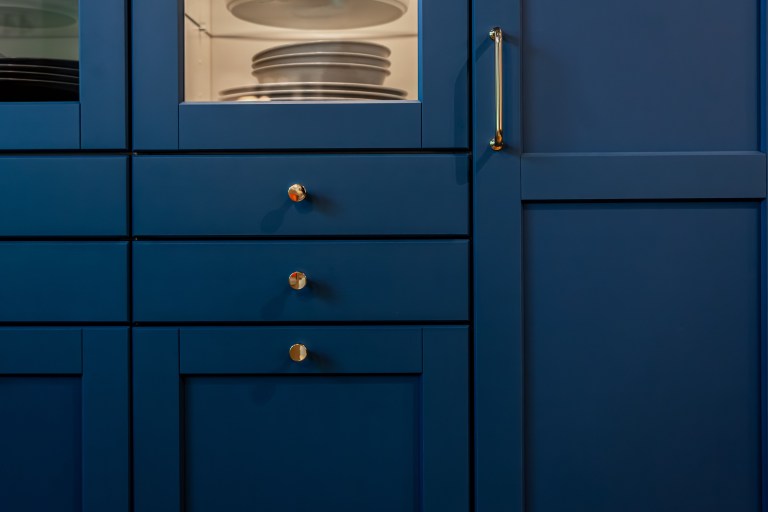
Switch plates, cabinet pulls, knobs, lampshades, curtain hardware, and other repeat details can change the room more than their size suggests. If the lease allows the swap, use compatible parts, store the originals, and document what belongs where.
The repetition is what creates the effect. One beautiful switch plate is a detail. Several coordinated details across the room begin to feel like a system. I love a small move when it has that kind of leverage.
Test adhesives on the actual wall, not your optimism
Paint age, sheen, preparation, drywall condition, humidity, product chemistry, weight, installation time, and removal technique can all affect what happens later. Test discreetly where permitted. Follow the manufacturer’s instructions. Keep packaging and removal directions. Photograph the wall before installation.
If the wall already has peeling paint, moisture, damage, or another condition that needs attention, do not cover the evidence with decorative material. Report the building problem first. Pretty is not a repair method.
It is worth being concrete about what going wrong costs, because the videos never are. Adhesive that lifts the top layer of drywall paper does not leave a mark you can wash off. It leaves a patch, a skim, a prime and a repaint of the whole wall so the sheen matches, and a landlord who has that done professionally will bill it at professional rates against your deposit. That is the actual downside risk of a fifty-dollar box of peel-and-stick panels. Not a disappointing look. A three-figure line item and an argument you will lose because you have no photograph of what the wall looked like in March.
Plan move-out while you are still excited about the project. Every temporary intervention should have a removal route.
How does it come off? What needs to be cleaned? Which original hardware goes back? Where is it stored? Is touch-up required? Who approved the change?
This is the unsexy part of renter design, which is exactly why it gets skipped. I still want it done. It is the difference between a reversible project and a future argument. The Renter-Safe Transformation Ladder exists for exactly this reason.
Make it belong to the room enough that nobody cares it is temporary
That does not mean fooling anyone into believing your peel-and-stick paneling is 150-year-old plasterwork. It means the intervention has proportion, repetition, scale, and a reason. It belongs to the room instead of sitting on top of it like a costume.
Use one strong move. Give it enough area. Make it solve a spatial problem. Then stop, before the room turns into a display case for the renter-friendly aisle. One strong intervention reads as architecture. Six of them read as a receipt.
Source note: Apartment Therapy’s 2026 design coverage specifically points renters toward reversible wallpaper, vinyl tile stickers, faux panel molding, and vintage lighting, while House Beautiful’s 2026 renter-upgrade coverage highlights hardware, lighting, and other no-renovation changes. Apartment Therapy. House Beautiful.
Same problem, elsewhere in the house
Room notes
Keep the room on the record.
One useful note at a time: what to test, what to ignore, and what changed when the room got another vote.