Light and Atmosphere
Vintage Lighting Is Doing More Than the Ceiling Ever Did.
Use vintage lamps, sconces, torchères, and distinctive shades to give a rental layered light and character without surrendering the room to hardwiring.
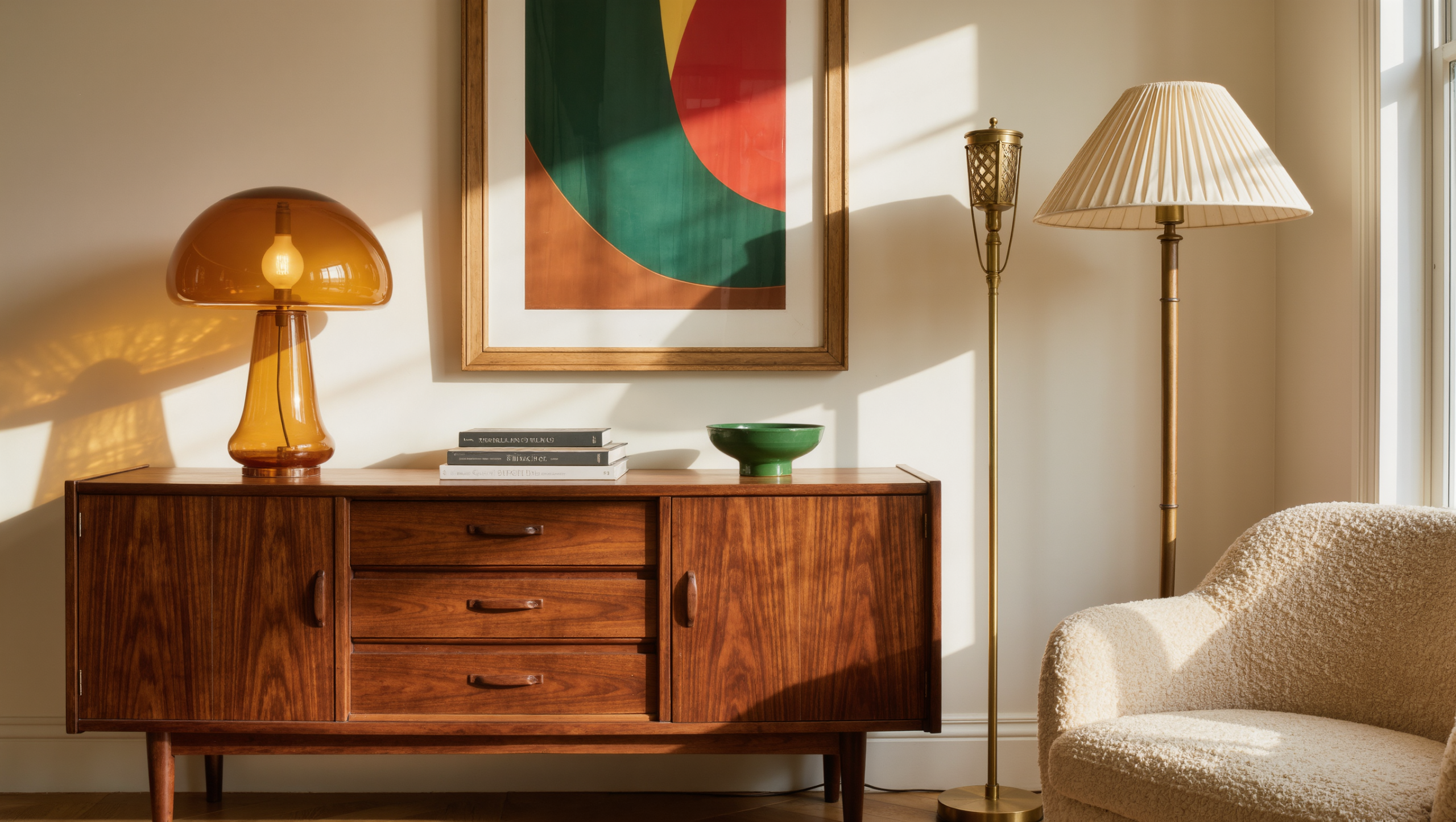
The fastest way to expose a rental is to turn on the overhead light. Suddenly the room that was almost charming looks like a waiting area with a sofa. Lighting has always been one of the best renter levers, and 2026 has made it more interesting: vintage fixtures, torchères, sconces, decorative shades, and small accent lamps are getting the attention they deserve.
Apartment Therapy’s 2026 State of Home Design survey found about 10% of responding designers naming vintage lighting as a major transformation tool, with particular interest in sconces and torchères. I care less about the trend label than the practical point underneath it: stop asking one ceiling light to create an atmosphere. It cannot. It has one job and, in a lot of rentals, it is barely doing that.
A floor lamp can have more authority than a bad chandelier
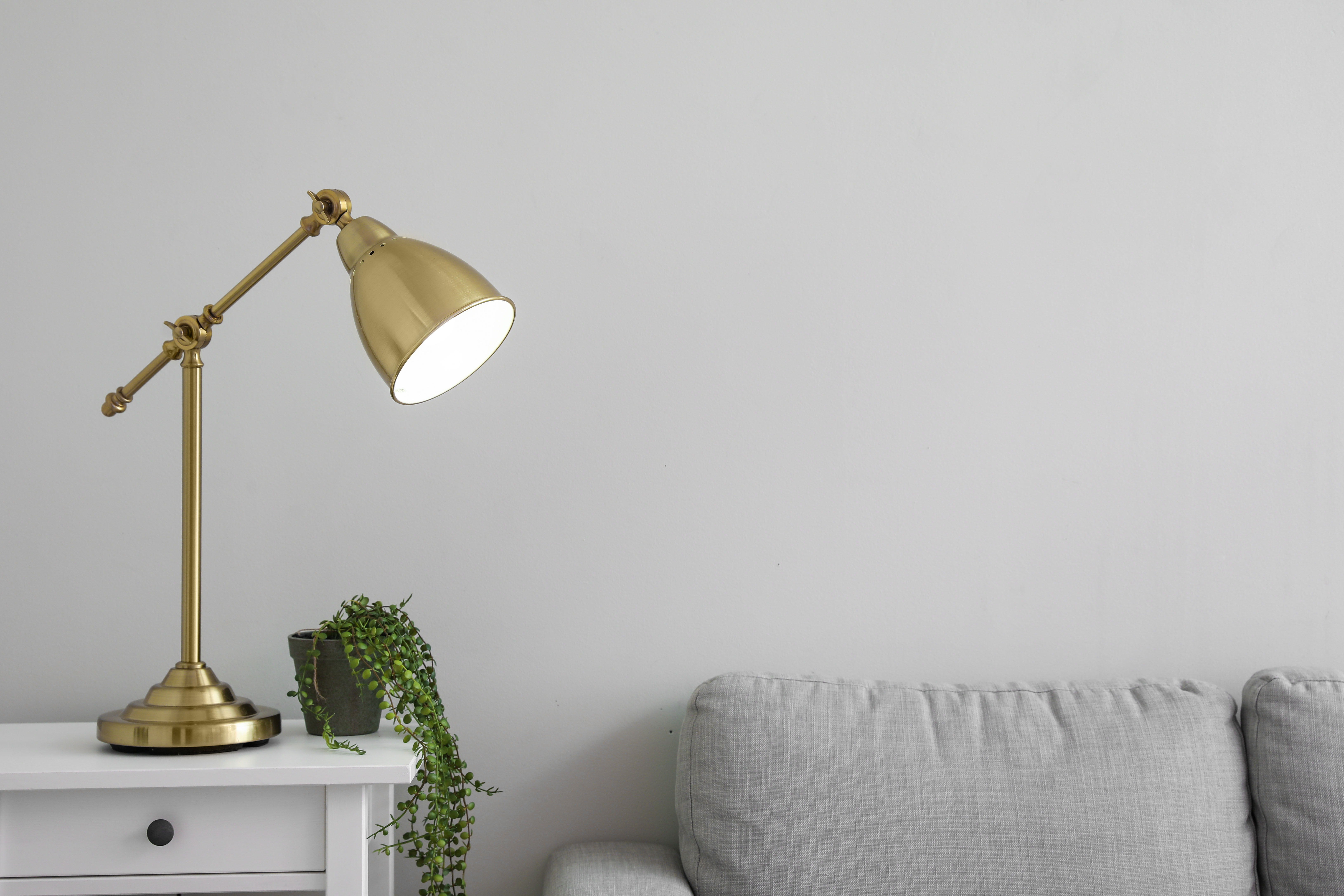
Portable lighting is often the reason the room finally works. A tall torchère can throw light upward and soften a room with no ceiling rewiring. A sculptural floor lamp can create a reading or conversation zone. A small lamp on a kitchen counter, bookshelf, bar cabinet, or hallway console can make a formerly dead corner feel deliberate.
The fixture is doing two jobs: changing the light pattern and giving the room an object with silhouette. I will take one strange, beautiful lamp with a real point of view over three anonymous white cylinders every time.
Do not buy vintage if the cord is trying to retire
Old lighting deserves the same common sense as any other electrical item. If wiring is brittle, frayed, cracked, scorched, loose, improvised, or otherwise questionable, do not plug it in and call the patina charming. Have the fixture properly evaluated or rewired before use.
A beautiful lamp with unsafe wiring is a problem with a shade on it. This is one of those places where the fun stops being fun if the basic safety piece is wrong.
And rewiring is the number that decides whether the whole trend is a bargain or not, so it should not be a footnote. A lamp repair shop charges for a rewire, and that charge does not scale down for a lamp that cost fifteen dollars. The forty-dollar flea-market find with a cracked cord is not a forty-dollar lamp. It is that plus a rewire, plus possibly a new socket, plus a shade that fits a fitting nobody has made since the sixties. Sometimes that total is still excellent value for an object with real presence. Sometimes it lands within ten dollars of a new lamp you would have liked just as much, and the only thing the vintage route bought you was three weeks of waiting.
Price the rewire before you buy, not after. It is the single question that separates people who own three good old lamps from people who own a closet full of projects.
Sometimes the shade is the whole plot twist
One of the lowest-effort changes is also one of the most visible: change the shade. Pleated paper, colored glass, patterned fabric, parchment-look material, scalloped edges, oversized proportions, and soft drum shapes can all change how the lamp reads while also changing how it throws light.
I like this move because it is small without looking timid. A shade can make an ordinary lamp weird, elegant, moody, tailored, or slightly theatrical in five minutes. It still has to fit the fixture properly and stay clear of heat according to the fixture and lamp specifications. No DIY material experiment deserves to live beside a bulb just because it looked clever online.
Sconces do not automatically require a construction meeting
Plug-in sconces, appropriately installed corded fixtures, and some rechargeable wall lights can give renters the vertical light they are usually missing. They can free a nightstand, frame a bed, light a reading chair, or give a hallway rhythm.
The installation method still has to match the wall, fixture weight, manufacturer instructions, and lease. Adhesive does not become structurally ambitious just because the product photo shows it floating happily over a bed. Use The Renter-Safe Transformation Ladder before assuming wireless also means zero consequence.
Put tiny lamps in rooms that never get nice light
Bathrooms, kitchens, hallways, laundry areas, and shelves are often condemned to either darkness or the full overhead blast. A small lamp can change the mood of those spaces disproportionately, provided it is used in a location appropriate for the fixture and away from water, heat, and other conditions it was not designed for.
This is the argument for the tiny lamp, and it is not that the tiny lamp is cute. I care that it creates a lower horizon of light and gives a formerly forgettable part of the house a reason to feel different after dark.
Vintage breaks the package-deal look
A room full of furniture from the same current collection tends to sit at one visual age. Add an alabaster lamp, brass torchère, ceramic base, opaline globe, or odd little shade with some history and the room gets a time layer. That matters in rentals, where the architecture itself may not give you much character to work with.
You do not need a period room. Please do not build one unless that is genuinely your thing. One old light in a modern room is often better than an entire themed decade. I want collected, not costumed.
Light the activity, then light the atmosphere
A beautiful fixture still has to help somebody see. Put task light where reading, cooking, getting dressed, working, or grooming actually happens. Then add the lower or softer sources that make the room feel good when the task is over.
If you are unsure where the missing layer is, use Lighting before buying another lamp. Aim for a better pattern of brightness, shadow and focus. Buy more lamps and you will own more lamps.
Buy the light you would be irritated to leave behind
Nothing about a lamp is a compromise, which is why I have spent this entire post on them rather than on ceiling fixtures nobody is allowed to touch. A good lamp solves different problems in different homes for years. A floor lamp that begins beside the sofa can become bedroom light later. A small accent lamp can migrate from a bar cabinet to a hallway to a desk.
That is the kind of purchase I can get behind: useful now, interesting enough to keep, and not married to one weird rental wall forever.
Source note: Apartment Therapy’s March 2026 State of Home Design coverage reported vintage lighting—especially sconces and torchères—as a notable designer trend and explicitly discussed reversible rental applications. Apartment Therapy, “Designers Say This Vintage Piece Is the ‘Jewelry’ Every Room Is Missing.”
Same problem, elsewhere in the house
Room notes
Keep the room on the record.
One useful note at a time: what to test, what to ignore, and what changed when the room got another vote.