Light and Atmosphere
The Sunroom Becomes a Plant-Filled Breakfast Club
Turn a sunroom into a plant-filled breakfast club by matching plants to real light, keeping the dining route clear, using durable surfaces, and planning shade, watering, and morning comfort.
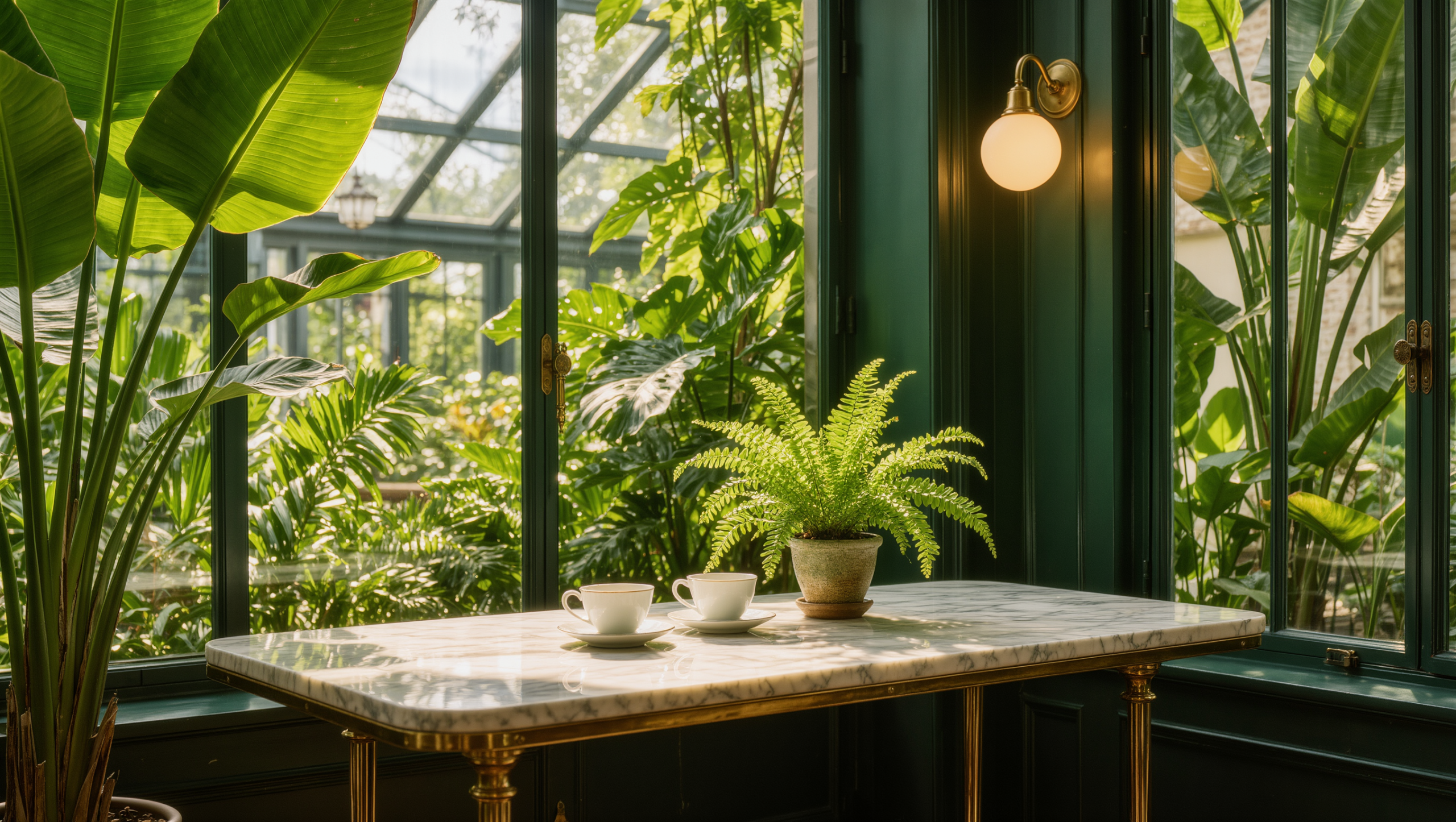
Plenty of sunrooms are thriving. The fern is magnificent, the fiddle-leaf has opinions, and nobody has eaten breakfast in there for months.
A bright room full of pots can still feel strangely unused. The stronger version combines light, seating, table height, circulation, plant care, and seasonal comfort so breakfast actually happens there instead of the room existing mainly to photograph leaves.
Plants can shape the architecture. They should not consume the table, block the window, or turn watering day into an indoor weather event.
Start with breakfast, not the plants
How many people use the room most mornings? Coffee and a book? Two people eating? Children doing homework after breakfast? A full dining setup?
Choose the table and seating for that daily use before allocating floor area to planters. The human activity gets the clearest route and most reliable surface.
A sunroom that supports breakfast once a month and plant care every day has chosen its priority whether anyone intended it or not.
Map the light across the day

Sunrooms can receive intense direct light, diffuse light, heat buildup, or dramatic seasonal change depending on orientation, glazing, roof, exterior shade, and climate.
Observe where direct sun lands in the morning and afternoon. Plant needs differ, and the most comfortable breakfast seat may not be the place with the most impressive sunbeam.
Choose plants for the actual light rather than using the room’s label as evidence that every plant will thrive.
Protect the best human seat
If the room has one perfect morning view or comfortable patch of light, do not give it automatically to the largest plant.
Place the main chair or dining seat first. Use plants to frame the view, soften the edge, or create privacy around it.
A room built for people can still be gloriously green.
Use plants as vertical architecture
Tall plants can define corners, create partial screens, soften glazing, and connect floor to ceiling. Hanging or climbing plants can use upper volume where appropriate.
Keep growth, pot size, stability, water access, and maintenance in mind. A plant that begins neatly beside the table may eventually occupy the route.
Plan for the mature size, not the garden-center silhouette.
Group plants by care where possible
Plants with similar light and watering needs are easier to maintain when grouped. This can also create stronger visual masses than distributing one pot onto every sill and surface. Seven pots on seven sills is a watering round, and it makes the room look as though it is holding a plant sale.
Use trays, saucers, or other appropriate protection to prevent water damage to floors and furniture. Check drainage and the needs of each plant rather than assuming decorative cachepots are watertight.
Keep the breakfast surface available
A dining or café table covered with plants is no longer a breakfast table. Limit permanent tabletop planting to what still leaves comfortable space for plates, cups, a book, and elbows.
Put the green drama on the floor, wall, shelf, or window edge instead of occupying the working surface.
Plan watering as a route
Where does water come from? How far must heavy pots move? Where does runoff go? Which plants need to be lifted for care?
A beautiful arrangement can become exhausting if watering requires carrying a can around furniture and reaching over the breakfast setup.
Keep frequently watered plants accessible and avoid placing heavy containers where regular movement would be unsafe.
Use furniture that can handle the climate
Strong sun and temperature swings can affect wood, fabric, finishes, plants, and upholstery. Choose materials for the conditions and use window treatments or ventilation where necessary.
A sunroom can be hotter, colder, or brighter than the rest of the house. The chair has to be comfortable in the room that actually exists. A black leather seat in a south-facing sunroom on a July morning is a small branding iron, and nobody lingers over coffee on one of those.
Give the room glare control
Morning sun can be wonderful and still make reading, eating, or screen use uncomfortable. Sheers, shades, exterior shading, or furniture orientation may reduce glare while preserving daylight.
Do not darken the entire room because one seat is badly positioned. Move the activity or control the light locally first.
Plan the evening version
If the sunroom is also used after dark, add lower light so the glazing does not turn the room into a black mirror with one ceiling fixture reflected in it.
A lamp near the table, gentle perimeter light, or illuminated plant mass can keep the room dimensional after sunset.
Use Lighting for the layered system.
Let one empty corner stay empty
Plant-filled rooms can become dense quickly because every bright patch appears to offer another opportunity.
Leave a clear view, open floor zone, or quiet wall so the plants read as deliberate groups rather than a collection that has expanded without border control.
Think seasonally
Summer heat, winter cold near glazing, changing sun angles, and plant dormancy can alter both comfort and care. The furniture and planting plan may need small seasonal adjustments.
Use Seasonal Layers when the room behaves very differently across the year.
People and plants, same conditions
People and plants want most of the same things here, which is the convenient part: a useful table, a comfortable seat, a clear route, honest light, watering you can actually manage, and enough atmosphere that the room is worth entering before the rest of the house is awake. Hand any one of those to the plants and take it from the people, and what you have built is a greenhouse with a chair in it.
The plants should make the room feel more alive, not more occupied.
Same problem, elsewhere in the house
Room notes
Keep the room on the record.
One useful note at a time: what to test, what to ignore, and what changed when the room got another vote.