Light and Atmosphere
The Morning Room and the Midnight Room Are Not the Same Place
One outdoor footprint can support radically different daily lives when seating, shade, surfaces, sound, storage, planting, lighting, and reset are designed as deliberate morning and night modes.
On this page
36
An outdoor room can be perfectly placed for morning and strangely wrong by evening.
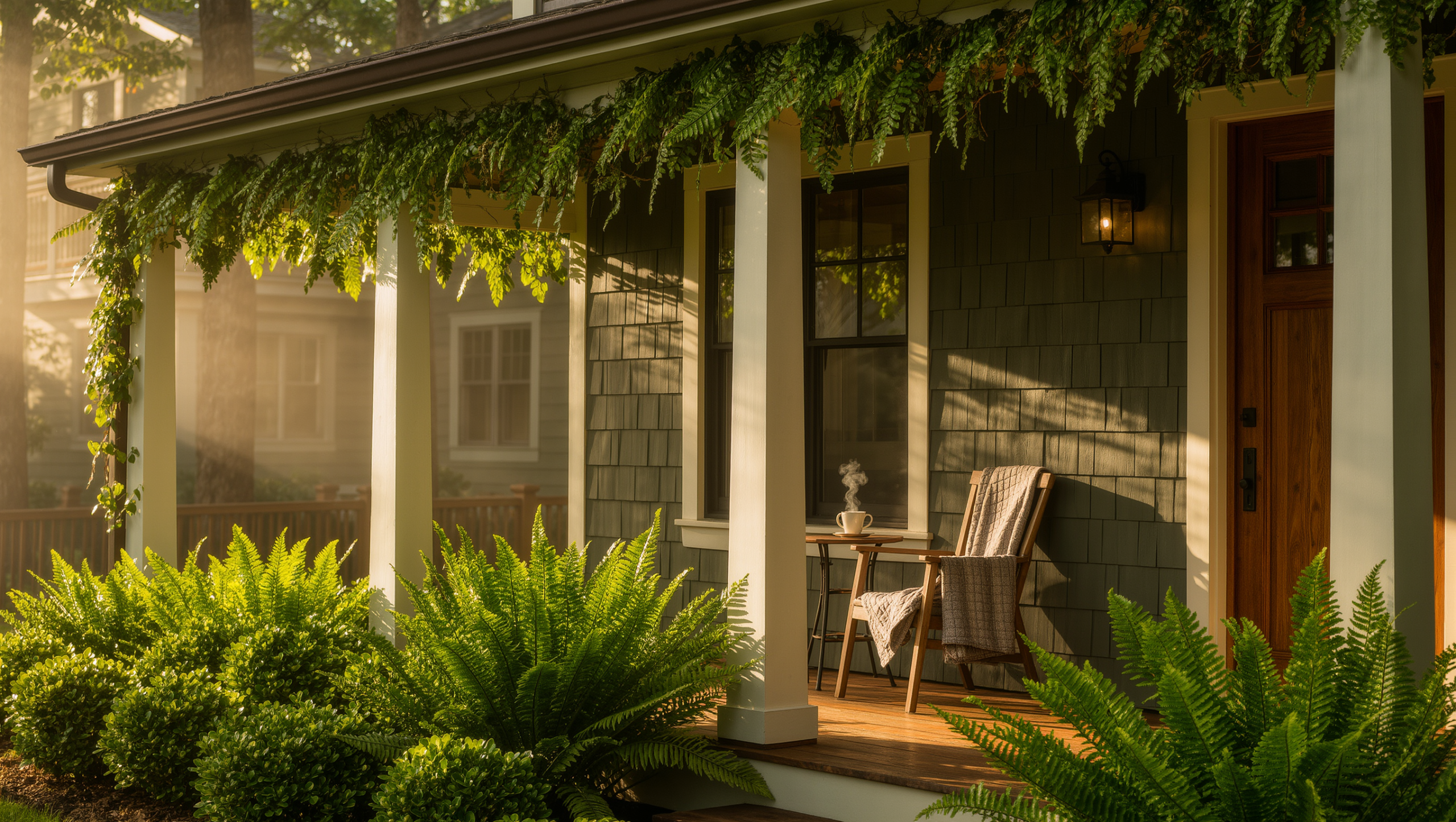
At eight o’clock, the air is cool. The nearest chair catches soft light. Coffee travels through the door in one hand. Birds and neighborhood movement make the room feel awake without being demanding. The small table is enough. The garden is the event.
At eleven at night, the same chair may face a black window, catch glare from the kitchen, sit too far from conversation, and offer nowhere to place a second drink. The table that held coffee is crowded with lamps, phones, and plates. The view has disappeared. The temperature has shifted. Sound carries differently. The room is being asked to perform another life without changing its operating state.
The morning room and the midnight room can occupy the same footprint, but they are not the same place. They use different light, posture, orientation, privacy, temperature, sound, surfaces, and rituals. Designing both does not require two complete furniture sets or a daily theatrical transformation. It requires identifying which decisions should remain fixed and which can change through a few intelligent actions.
A room with modes is not indecisive. It is responsive.
Two rooms, one footprint
Name the two lives precisely
Morning and midnight are evocative, but the design should begin with actual behavior.
The morning life may be coffee for one, breakfast for two, reading, watering plants, taking a call, stretching, or a quiet transition before work. The late-night life may be conversation, drinks, solitary decompression, dessert after dinner, looking at the sky, listening to music, or sitting outside after the rest of the house becomes quiet.
Write one sentence for each mode.
Morning: One person should be able to step outside with coffee and use the room immediately for twenty minutes without setup.
Night: Four people should be able to talk comfortably after dinner with low light, useful surfaces, and a clear route indoors.
The sentences reveal where the modes agree and conflict. Morning values readiness and a small footprint. Night may require expanded seating and layered light. Both may value the same view, but one sees planting and the other sees illuminated depth.
Separate fixed architecture from changing equipment
Some elements should support both modes without moving.
The ground plane, primary route, door relationship, major planting, structural boundaries, drainage, power, and permanent lighting should work throughout the day. The main seat or bench may remain fixed if its orientation serves both lives. Storage should be accessible without interrupting either mode.
Other elements can change: one chair rotates, a small table moves, shade opens, a lamp turns on, a cushion appears, a curtain closes, or a tray moves from the kitchen. The change should be limited and legible.
If the room must be completely rearranged twice a day, it has not been designed with modes. It has been given two conflicting floor plans and a household labor requirement.
A useful target is three actions or fewer for a frequent transition. More elaborate seasonal or occasional modes can tolerate more work.
Morning begins at the threshold
A morning room gets used briefly and without warning. Going out has to take less thought than deciding not to.
Keep the route clear. Provide a stable surface within immediate reach. Make the door easy to operate with one hand. Store any essential seat pad, blanket, or reading object close enough that retrieving it does not turn the visit into preparation.
The best morning seat may be near the door because convenience determines use. That position should still receive a worthwhile view and enough separation from kitchen clutter or household traffic.
Notice the inside view before stepping out. Morning light on planting, a chair, or a simple table can invite use. A storage box, stacked cushions, and yesterday’s dishes send a different message.
Connect the transition to The Back Door Is Part of the Outdoor Room.
Night begins before sunset
The night room should not wait until darkness to become functional.
Observe the transition hour when direct sun leaves, temperature changes, indoor lights become visible, and people shift from activity to conversation. This is when the room’s second mode should begin.
Shade may retract or become irrelevant. A chair may turn inward. Portable light may move to the table. Cushions or blankets may appear. A door may close to control insects, temperature, pets, or sound. The far edge of the garden needs illumination before it disappears.
Set the night mode while enough daylight remains to move safely and see what the room needs. The goal is a smooth handoff, not a sudden moment when everyone discovers the table has become invisible.
Furniture that has to face both ways

The primary seat may need two orientations
Morning often looks outward. Night often gathers inward.
A chair positioned toward sunrise, planting, or an open view may be ideal for solitary use. At night, the same orientation can turn its back on conversation or face an empty dark boundary. A movable chair can rotate between the view and the group. A swivel base, light frame, or carefully positioned pair can allow change without moving across the entire room. The swivel gets dismissed as a gimmick and it is the thing here that most reliably works, because it changes where a seat points without changing the plan of the room, which is the whole problem this section is about. A chair that has to be picked up and carried gets turned on the first three evenings and then stays where it is for the rest of the summer.
Fixed benches can support both modes when movable chairs complete the night group. A bench may face outward in the morning and form one side of a conversation crescent at night. The geometry should remain comfortable in both conditions.
Mark each orientation and test the occupied route. A rotating chair should not sweep into a planter, table, door, or another seat.
Morning surfaces and night surfaces do different work
Morning may need one cup, a book, glasses, or a small plate. Night may need several drinks, snacks, phones, a lamp, serving pieces, and personal items.
One tiny side table cannot always serve both. Instead of filling the room with permanent tables, use layered surfaces: a stable daily table, a broad bench arm or ledge, and one movable or nesting surface that appears at night.
Keep the morning surface clear enough to signal readiness. Store night accessories elsewhere. A room that begins every day with yesterday’s glasses and a collection of rechargeable lamps has lost the morning argument.
At night, ensure every regular seat can reach a surface without leaning across another person. Do not place lamps where they consume the only useful area.
Light, dark, and everything that reverses
Shade is part of the morning clock
Morning light changes quickly. A seat comfortable at seven may be exposed at nine.
Track the intended use period. Shade from the house, tree, screen, umbrella, or overhead structure should protect the body and the activity. An empty floor in perfect shade helps nobody. Low sun may enter beneath a canopy and create glare on books or screens.
A movable shade can extend morning use if operating it is simple. Fixed shade should not darken the room unnecessarily during cooler seasons or block the night sky if that view matters.
In some climates, the morning room belongs to sun rather than shade. Direct warmth may be the reward during cold seasons. Design seasonal settings rather than assuming one shadow pattern is ideal all year.
Use Shade Is a Moving Wall to test the occupied morning shadow.
Night light should reveal a different room
Night mode is not morning mode with bulbs switched on.
Build layers. The threshold and route need clear light. The primary conversation or solitary activity needs local light. Faces and surfaces should remain comfortable. A farther wall, tree, or planting group should hold visual depth.
Do not illuminate every daytime feature. Night can edit. One plant may become architecture. A wall may become the horizon. A pool of light can create a smaller room inside a larger patio.
Control glare from indoor windows, exposed bulbs, reflective tables, and bright fixtures across seated sightlines. Test the room from inside and outside. Lower interior light where practical so the outdoor scene does not disappear behind reflections.
Connect the full night composition to After Sunset, the Outdoor Room Finally Tells the Truth.
Privacy reverses after dark
Daytime planting, reflection, and brightness may make the room feel protected. At night, illuminated occupants can become visible against surrounding darkness.
Test the main seats from sidewalks, adjacent windows, interior rooms, and relevant property edges. A morning seat near the boundary may need a different night orientation or temporary screen. Curtains, movable planting, lighting contrast, or a shifted social center can provide targeted privacy.
Do not build a full daytime fortress to solve a nighttime sightline. Use the minimum intervention required for the night position.
Test it from the sidewalk with the lamps on, not from the chair. From inside the light, everything beyond it looks like nothing at all, and that is exactly the illusion that lets a household sit brightly lit in an open garden every evening for a year, entirely satisfied that the planting is doing its job.
The view outward also changes. An opaque privacy screen may feel protective in daylight and become a close dark wall at night. Light, texture, planting, or distance can keep the boundary from collapsing onto the seating.
Sound changes with the hour
Morning sound is often observational: birds, traffic beginning, irrigation, household movement, wind, distant work. Night sound is more socially sensitive. Voices carry. Music becomes more noticeable. Mechanical equipment and neighboring activity may emerge after other sounds fade.
Place the night conversation center with awareness of adjacent windows and property edges. Turn speakers inward. Keep seats close enough for ordinary speech. Use the house, planting, or suitable boundaries to shape the room, and expect a hedge to soften a conversation rather than keep it a secret.
The morning position may tolerate a nearby road because the visit is brief. At night, the same noise may require a more protected or inward-facing position.
A room with modes can shift its acoustic center rather than forcing every hour into one location. The midnight room is also the one with a neighbor in it. Whatever the property line means at two in the afternoon, at eleven at night four voices and a speaker travel straight across it. The design answer is a quieter center farther from the boundary, which costs nothing, works immediately, and is a great deal cheaper than being right about who lived there first.
Temperature has a daily plot
Morning and night may both be cool, but they are not thermally identical.
Morning surfaces may hold overnight cold or dew. Direct sun may provide welcome warmth. Night surfaces may release heat stored during the day, then cool rapidly after sunset. Wind direction may change. Humidity and condensation may increase.
Test seat materials with the body, because material is where the two modes actually collide. Stone is an ally at night and a problem at breakfast: it hands back the day’s heat as the air cools, and it holds the overnight cold for the person who arrives at seven with a cup. Thin metal has no such loyalty. It stores almost nothing, drops to the air temperature soon after sunset, and then pulls warmth out of whoever sits on it at either end of the day. Timber splits the difference, which makes it the sensible choice for a seat that has to do both jobs. Dark fabric runs the opposite way, excellent at ten at night and a damp sponge with a view at nine the next morning. A seat comfortable at night may be wet in the morning. A table cool at breakfast may still be warm through the evening transition.
Provide small seasonal adjustments: a morning pad stored just inside, a night blanket basket, a more protected evening seat, or furniture that can move away from stored heat. Follow product guidance for any powered heating, cooling, or lighting equipment.
Dew is a morning design condition
An outdoor room may be dry when everyone leaves and damp when morning begins.
Observe which cushions, tables, rugs, and surfaces collect dew. Decide what can remain outside and still support immediate use. A room intended for spontaneous morning coffee should not require drying several textiles first.
Use fewer permanent soft objects in exposed positions. Choose a chair or bench that remains usable with one quick wipe or one temporary pad. Provide a nearby cloth or small maintenance kit if that action is genuinely acceptable.
The night reset should prepare the morning room. Store vulnerable textiles, clear glasses, and position furniture so the first user does not inherit the previous evening’s weather experiment.
Where everything waits
Morning storage should be almost invisible
The morning mode is strongest when the room feels calm and ready.
Store night lamps, extra surfaces, blankets, serving pieces, and guest cushions close enough to retrieve but outside the first view. A shallow cabinet, interior basket, bench compartment where suitable, or assigned shelf can support the transition.
Do not put all storage at the threshold if it blocks light, view, or movement. The most frequently used morning object should be easiest to reach. Occasional night capacity can live slightly farther away.
Label the mode through order rather than decor. One cup surface, one seat, and a clear view can be enough.
Night storage needs a parking plan
Portable lamps need charging positions. Covers need somewhere to go while furniture is used. Blankets need a dry home. Movable tables and chairs need parking positions that do not obstruct the morning arrangement.
Design the storage and parking before adding accessories. If the night mode requires retrieving six objects from three rooms, use will decline. If everything remains outside permanently, the morning room will begin to feel like backstage after a performance.
A complete night kit might fit in one basket or cabinet: two lamps, a blanket, coasters, and one support cushion. The operating system should be proportionate to the value of the mode.
The room needs a reset moment
Mode change depends on reset.
After night use, clear food, glasses, waste, vulnerable textiles, and portable equipment. Return the primary chair to its morning orientation. Place the daily table within reach. Adjust shade or covers as required. Leave the route clear.
The reset should take only a few minutes. If it is consistently postponed, reduce the number of objects or change storage proximity.
And the reset belongs to the night. A morning visit lasts twenty minutes and the person making it has not agreed to inherit anything. Leave last night’s glasses on the table and the morning room becomes somewhere the household walks past on the way to the kitchen, until it stops occurring to anybody to go out there at all.
Morning may also reset the room for later use: opening shade, checking plants, drying a surface, or charging a lamp. The two lives can support each other rather than compete.
The planting reads twice
Morning planting is read in detail
At close range and in clear light, leaves, flowers, texture, scent, insects, water, and seasonal change become prominent.
Place morning planting where it rewards the seated position without blocking air, light, or the route. Consider scent intensity, pollen, watering, and whether wet foliage brushes the user. A few strong forms may create more calm than a miscellaneous collection of pots requiring attention before coffee.
Planting can also filter low sun and create privacy from early neighborhood movement. Test mature height and seasonal density.
The morning room benefits from evidence of life, but it should not make the first user feel they have reported for garden maintenance.
Night planting is read as mass and silhouette
After dark, fine detail recedes. Shape, movement, shadow, and selected reflection become more important.
Choose one or two planting groups to light softly. Backlight can reveal silhouette. Grazing light can catch texture. A darker planted mass can create a protected edge without every leaf being visible.
Avoid illuminating all planting equally. The room needs darkness to create depth. Check that fixtures do not glare from seats or disturb neighboring property.
Planting that looks full by day may become a flat dark wall at night. Use gaps, layered heights, and a farther point of light to keep the composition open.
Morning and night may prefer different centers
The morning center may be one chair near the door. The night center may be a conversation group farther from household traffic.
Both can coexist if routes, storage, and furniture are planned as a sequence. The morning chair can become an edge seat in the night group. A dining table can remain quiet in the morning and serve as a night landing surface. A bench can connect both zones.
Do not force one geometric center to dominate every hour. A larger outdoor space can contain several temporal centers without becoming fragmented.
Use light and occupation to activate only the relevant center. The unused portion can remain visually present but quiet.
The view from inside changes twice
In the morning, the outdoor room may extend daylight into the house. Planting, furniture, and sky become part of the kitchen or living room view.
At night, the glass can become a mirror unless the exterior has sufficient depth and the interior light is controlled. The outdoor room may read as a dark hole, a luminous destination, or an exposed stage.
Photograph both conditions from the main interior positions. The morning composition should not be dominated by stored night equipment. The night composition should reveal enough of the exterior to maintain connection.
This inside view matters even when nobody is outside. A room with modes contributes to the house throughout the day.
Which mode wins, and when
Design for weekday morning and weekend night
Frequency should determine convenience.
If morning use occurs daily and night use twice a month, the fixed room should favor morning. Night capacity should appear through movable elements. If evening gathering is frequent and morning use occasional, the social center may remain fixed while one edge seat supports breakfast or coffee.
Do not give equal physical territory to unequal behaviors simply because both sound appealing. The dominant mode deserves readiness. The secondary mode deserves an efficient transformation.
Track actual use for two weeks. Aspirational midnight gatherings should not displace the morning habit that already exists.
Season changes which mode is dominant
Summer may favor early morning and late night while the middle of the day becomes too hot. Autumn may extend evening use with a smaller protected group. Winter may make morning sun valuable and midnight use rare. Spring may bring wind, pollen, and unstable temperature.
Build seasonal mode cards. Record the primary seat, shade position, textiles, lighting time, storage, and likely duration for each season. The room does not need identical settings all year.
Seasonal contraction can improve the design. A large summer conversation zone may become one winter chair and lamp. The rest of the room remains visually composed without pretending to be occupied.
Four dual-mode room patterns
The coffee chair and conversation crescent
One chair near the threshold faces the morning view. At night, it rotates to become the open edge of a larger crescent formed by a bench and movable chairs. One daily table remains; two nesting surfaces appear after dark.
The breakfast table and midnight lounge
A compact table supports morning meals. At night, chairs turn away from the table toward a darker planted edge or view. The table becomes a service surface while conversation occupies a nearby group.
The long porch with temporal ends
The brighter end near the kitchen serves morning. The more protected far end serves night. A continuous route, repeated material, and layered lighting connect them. Only one end is fully activated at a time.
The small balcony with one moving chair
A single chair faces outward in the morning. A second folding or stacked seat joins at night, and the primary chair angles inward. One portable lamp and one small surface complete the transition without filling the balcony permanently.
Where dual-mode rooms fail
Common dual-mode failures
- The total reset: every mode change requires moving most of the furniture and accessories.
- The morning inheritance: night glasses, lamps, covers, and cushions remain in the first view.
- The night glare: a seat positioned for daylight faces bright interior glass or an exposed fixture after dark.
- The single tiny surface: the table works for coffee and fails when four people arrive.
- The fixed social center: permanent group seating consumes the space used daily by one person.
- The fixed solitary center: every night guest must arrange themselves around a chair designed only for the view.
- The daytime privacy solution: a dense boundary protects morning use and becomes oppressive at night.
- The mode-storage tax: accessories live too far away or have no parking position.
- The season denial: one setting is expected to perform through changing sun, temperature, foliage, and use.
The six-action mode test
Move the room from morning to night, then back again.
- Rotate or move the primary seat into its night relationship.
- Add only the extra surfaces and seats required for regular night use.
- Set shade, privacy, or weather boundaries for the evening condition.
- Turn on route, activity, face, and depth lighting.
- Bring out the limited night comfort and service kit.
- Reverse the process and prepare the room for immediate morning use.
Count the actions, trips, and storage conflicts. If each direction requires more than the household will reliably perform, simplify the modes or assign one as seasonal rather than daily.
One footprint can have more than one personality
Early light and late conversation do not ask for the same conditions, and the outdoor room can have both once it stops pretending otherwise.
Give morning the shortest route, the clearest surface, the useful view, and enough readiness that someone can step outside without staging the room. Give night a deliberate transition, comfortable social geometry, layered light, targeted privacy, surfaces, and a reset plan.
Keep the architecture stable and let only a few elements move. Build the storage around the transition rather than around the objects. And test the room in both conditions, because a daytime photograph predicts the night about as reliably as a menu predicts the meal.
One more thing, and it is the part that decides whether any of this holds. Within about a month the household will quietly elect a favorite mode and stop switching. Households do that, and nobody should take it personally. The design’s job is to make sure the winner is the mode they actually use, and not the one the furniture happens to be pointing at.
Continue with After Sunset, the Outdoor Room Finally Tells the Truth, Shade Is a Moving Wall, and The Outdoor Room Needs More Than One Kind of Conversation.
Same problem, elsewhere in the house
Room notes
Keep the room on the record.
One useful note at a time: what to test, what to ignore, and what changed when the room got another vote.