Function and Flow
Sustainable Outdoor Design Needs Better Answers Than Gravel and Bamboo
Sustainable outdoor design is a systems problem: water, shade, soil, materials, maintenance, durability, and human use all have to work together.

On this page
8
If the sustainable choice makes the yard miserable to sit in, impossible to maintain, or disposable in three years, it has missed a fairly important part of the assignment.
I am suspicious of any outdoor product that needs a sustainability speech longer than its useful life.
Room for Drama already has the individual pieces: xeriscaping, rainwater, native planting, permeable patios, irrigation, edible landscapes, clover, firewise strategy. Good. Those subjects deserve their own detail. But a yard does not experience them one article at a time. Water affects planting. Shade affects water. Materials affect heat. Maintenance affects whether any of the good intentions survive August.
Sustainability is whether the whole place keeps making sense.
The greenest thing may be the thing you do not replace
A sound patio does not automatically need demolition because a newer permeable material photographs better. A healthy mature tree does not need to disappear because the new plan would look cleaner without it. A fence that can be repaired does not become morally inferior because reclaimed cedar is currently more charming.
Start with retention. What is structurally sound? What already creates shade? What is adapted to the site? What can be repaired instead of removed? What is ugly because it is genuinely failing, and what is ugly because you looked at too many new yards this week?
I love transformation. I also love not spending money to solve a problem we invented.
Demolition is part of the environmental footprint, even when the replacement has excellent branding.
Shade is infrastructure.
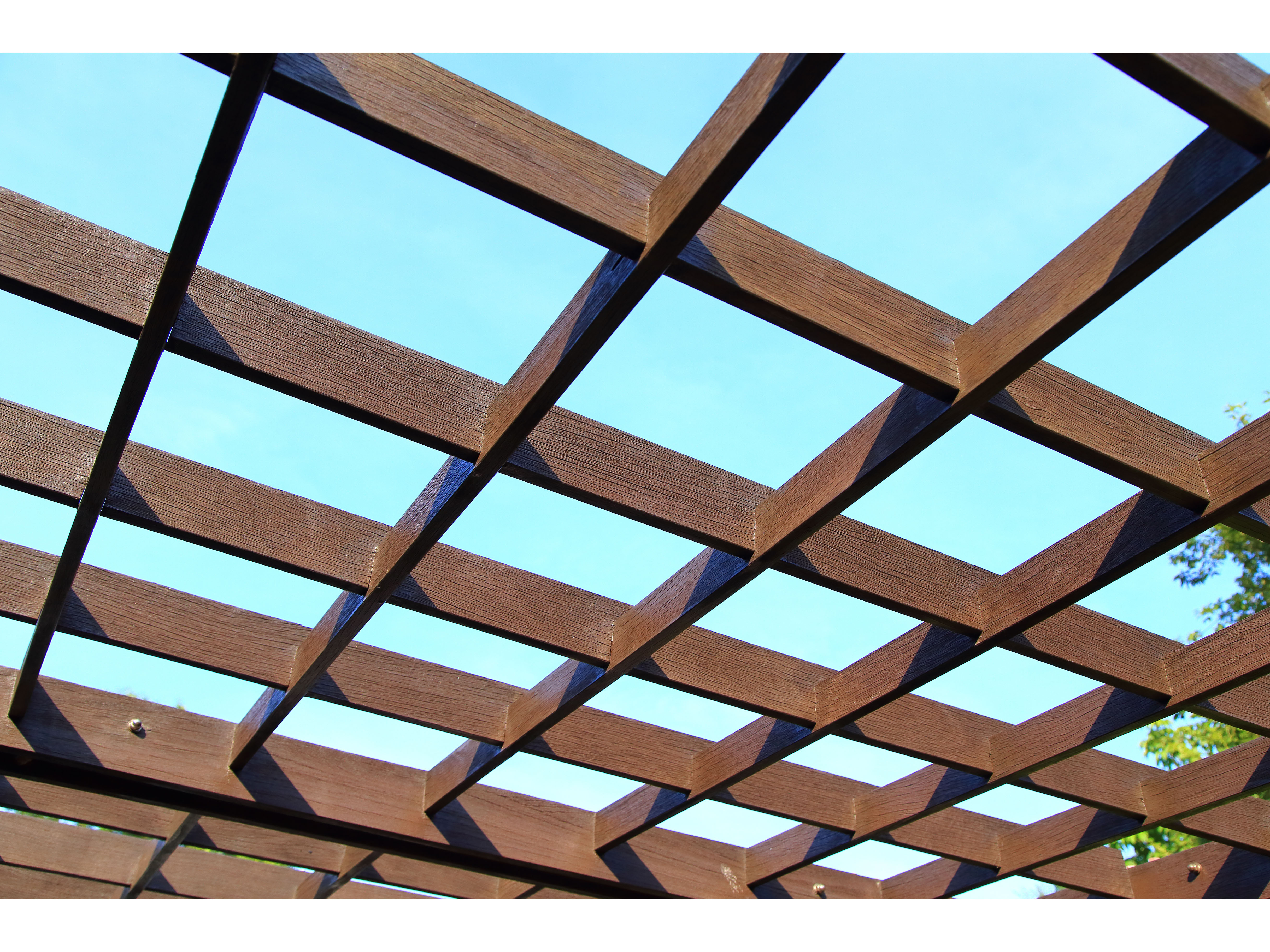
Shade changes whether people stay outside, how hot paving becomes, how quickly soil dries, which plants can survive, and whether the west side of the patio feels like a skillet at five o’clock.
That shade might come from a tree, pergola, awning, umbrella, screen, or vine. The answer depends on climate, exposure, maintenance, and how permanent you need the solution to be.
Observe the sun before buying the furniture. Then observe it again at the hour you actually use the yard. Noon is not dinner. June is not October. A shade structure that wins one moment and ruins useful winter sun in another is not automatically the clever choice.
Comfort and sustainability are the same conversation when the room is designed to work with the site instead of constantly correcting it.
Water needs a route before it needs a lifestyle accessory
Rain barrels are useful if overflow has somewhere safe to go. Rain gardens are useful if grading, soil, and drainage are right. Drought-tolerant planting is useful if establishment water and mature needs are understood. Permeable paving is useful if the base and site conditions let it perform.
There is a recurring design problem here: we buy the visible eco-feature and skip the boring system underneath it.
Water-wise design puts the right amount of water in the right place, groups needs intelligently, and keeps runoff from becoming a foundation problem or your neighbor’s problem. Nothing in it starves the landscape.
If the system only works when someone remembers six separate watering exceptions on the right day of the week, it is not a resilient system. It is a system with one person in it.
Materials do not become virtuous because they look natural
Reclaimed wood can be wonderful. Recycled metal can be wonderful. Composite decking can be a smart choice. Natural stone can last for decades. All of them can also be terrible choices in the wrong exposure, bad installation, or maintenance reality.
Ask what year ten looks like. Ask whether the material can be repaired. Ask what happens in freeze-thaw cycles, direct sun, standing water, snow removal, pet traffic, grill grease, furniture drag, and the ordinary abuse of a space people actually use.
I care much more about the full life of the material than whether the sample has a small green leaf printed on the label.
Durability is not boring. Replacing failed outdoor material every few years is boring, expensive, and wasteful.
Plant for the yard you have, not the yard in the plant tag photograph
Native and regionally adapted planting can reduce inputs and support habitat, but the word native does not override light, soil, moisture, mature size, wind, snow load, pets, children, circulation, or the fact that you still need to get the lawn mower through the gate.
Group plants by similar needs. Give them room to become the plants they are going to become. Repeat where repetition creates calm. Leave access for pruning and cleanup. Put the fussy thing where you will actually notice it needs help.
A resilient garden can be lush, dramatic, strange, restrained, colorful, moody, architectural, or all of those in different places. Ecological does not have to mean visually apologetic.
And it definitely does not require turning the yard into gravel with three grasses standing around looking responsible.
Low maintenance is designed, not purchased
There is no zero-maintenance yard. There are only yards that distribute the work well and yards that hide it until everything needs attention at once.
Reduce awkward little edges. Keep hoses and tools where they are used. Do not plant something that needs constant water on the far side of a dry yard because the color was perfect. Choose furniture that does not trigger a cushion evacuation every time a cloud develops.
This is where my impatience is useful. If a system takes eleven annoying steps to maintain, I know exactly how long my enthusiasm for it will survive.
Sustainability includes the human who has to keep the thing going.
The room should earn more of the year
A patio used for eight months is doing more work than one used for eight perfect weekends.
Warm localized light, wind protection, shoulder-season sun, movable shade, durable textiles, and furniture that can tolerate weather can extend use without pretending the backyard is climate-controlled.
In cold climates, storage, drainage, snow load, freeze resistance, and winter access deserve the same attention that summer shade gets. The photograph may be greener in July. The design has to live through February too.
I would spend on the systems before the styling
Ground. Shade. Drainage. Seating. Lighting. Planting structure. Storage.
Those are the things that determine whether the room works. Decorative layers can arrive later, ideally after the yard has survived a season and told you what it actually needs.
This is not anti-decoration. I am not interested in stripping personality out of anything. Quite the opposite. I want the beautiful layer to have something competent underneath it so it can be as dramatic as it wants without compensating for bad drainage.
A sustainable outdoor room should be the room you choose to use because it is cooler where it should be, planted for the site, easier to maintain, built from materials that make sense, and not constantly asking for replacement parts.
Fewer inputs. Less waste. Better adaptation. More time actually living outside. That is much more persuasive to me than a yard that merely looks eco-conscious.
And if none of it survives contact with an actual August, it was decoration with a vocabulary. Three summers in, the only question left is whether the person who lives there is still doing the watering. That gets decided by where the spigot is, how far the hose reaches, and whether the thirsty thing ended up on the dry side of the yard. It does not get decided by what is printed on the label.
Source note: 2026 U.S. Houzz Outdoor Trends Study; see also Room for Drama’s existing outdoor sustainability series for topic-specific guidance.
Same problem, elsewhere in the house
Room notes
Keep the room on the record.
One useful note at a time: what to test, what to ignore, and what changed when the room got another vote.