Light and Atmosphere
The Backyard Spa Needs a Reason to Exist After the Cold-Plunge Trend Moves On
A backyard wellness space should support a ritual you will actually repeat, with privacy, climate, maintenance, and infrastructure handled before the equipment becomes the story.

On this page
9
The backyard wellness room has reached the stage where one can apparently purchase a cold plunge before deciding where the towels go.
I understand the appeal. A cedar sauna under dark trees? A steaming tub in snow? A quiet chair behind planting where nobody needs anything from you for twenty minutes? I am not difficult to sell on atmosphere.
I am harder to sell on the idea that expensive equipment automatically creates wellness.
Houzz’s 2026 outdoor research found plunge pools and saunas each appearing among 2% of homeowners upgrading outdoor structures. That is still a small number, which is exactly why I find it interesting. The idea is moving outside the resort and into ordinary residential planning. Skip past the trend to the question worth asking: what kind of pause are you trying to build into your actual life?
Choose the ritual before you choose the object
Ten quiet minutes after work. Stretching in the morning. A hot soak in winter. Reading where the house cannot find you immediately. A sauna routine. An outdoor shower after gardening. Coffee alone before everybody else is moving.
Start there.
If the behavior is vague, the equipment is doing all the storytelling. That is when a very expensive object can become a beautifully lit reminder of the person you imagined you would become.
Aspirational design is fine by me. I am also a working mom with a full-time job and an entire publishing ecosystem I run on the side. I have a healthy respect for the difference between a ritual that fits life and one that needs a project manager.
The easier the good thing is to repeat, the more likely it becomes part of the day instead of part of the tour.
Privacy is not optional just because the yard is technically yours
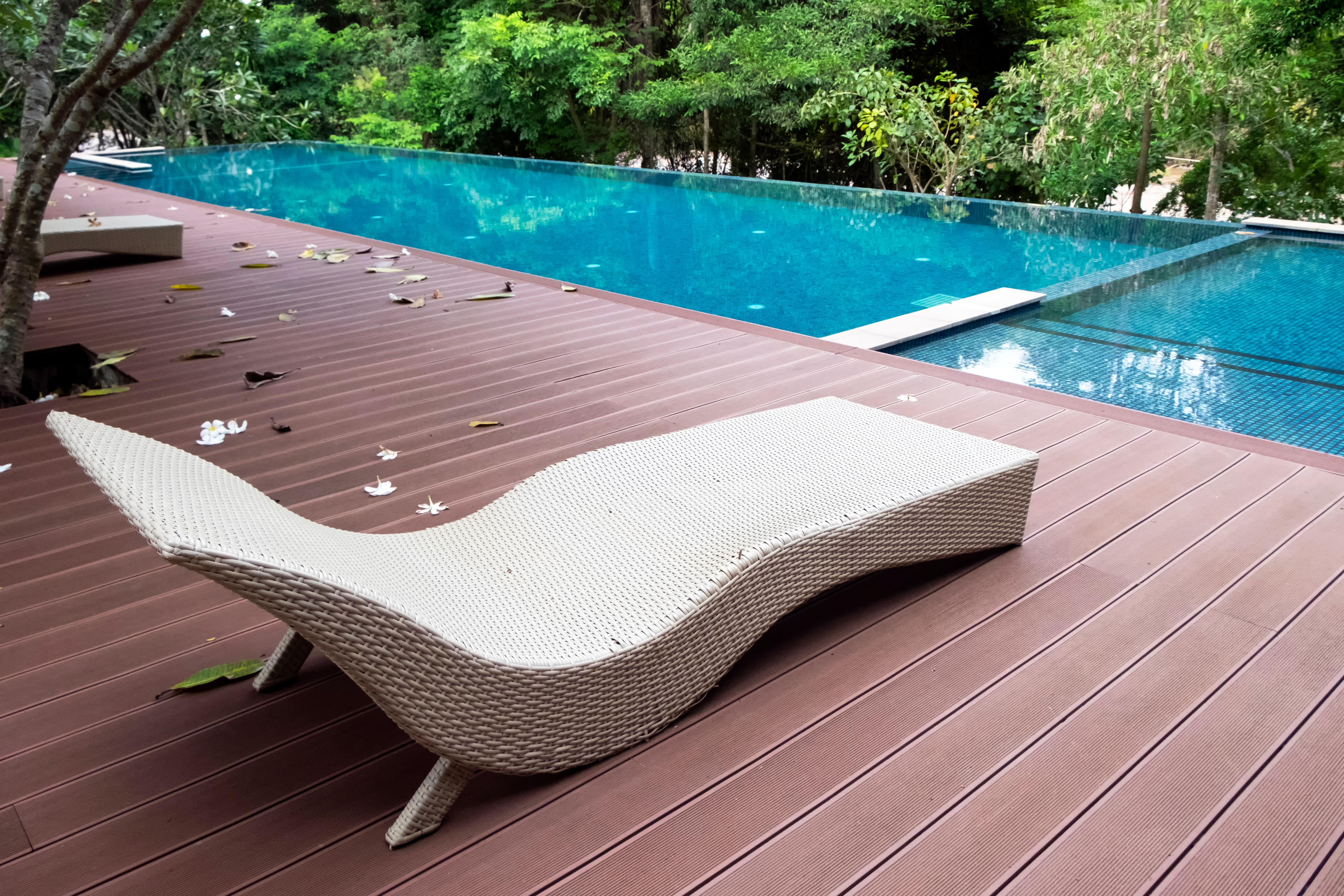
Most people do not relax particularly well while feeling displayed.
You do not need to wall off the entire property. Protect the occupied position. Block the neighbor’s second-story sightline. Turn the chair away from the service alley. Use planting, a screen, a change in level, or one wall in the exact place where it matters.
Keep the sky. Keep air movement. Keep a view worth keeping.
The goal is tucked away, not detained.
I like privacy that feels almost accidental, as if the garden simply decided to close around the place where you sit.
The route is part of the ritual
The glamorous object tends to lose the argument once the maintenance starts talking.
Where do shoes come off? Where does a robe land? Where are towels stored? Is there a dry surface for water, glasses, or a phone? Is the path lit? Is it icy in winter? Is the bathroom absurdly far away? What happens when it starts raining halfway through whatever serene thing you are doing?
A hot tub fifteen awkward steps across exposed paving is a negotiation.
Design the before and after with the same attention as the center. A retreat that creates twenty minutes of setup and cleanup has misunderstood what people are retreating from.
Heat, water, and cold need very unromantic infrastructure
Saunas, spas, plunge systems, outdoor showers, heaters, and related equipment can involve electrical, plumbing, drainage, ventilation, structural, sanitation, freeze-protection, and local-code considerations. Follow manufacturer requirements and use qualified trades where installation requires them.
This is the paragraph where the mood board has to leave the room for a minute.
Service access matters. Drainage matters. Winterization matters. So does being able to reach the equipment later without dismantling the beautiful enclosure somebody built around it.
I love the dramatic reveal. I do not love a maintenance panel hidden behind three hundred pounds of stone.
Listen before you build the quiet room
Outdoor wellness spaces get designed visually and then placed beside the pool equipment, an HVAC unit, the neighbor’s basketball hoop, or the busiest route through the yard.
Stand there with your eyes closed.
Traffic. Pumps. Dogs. Wind. Voices. Mechanical hum. The gate slamming. The place where the house itself becomes quieter. Sometimes planting, a wall, water, or distance can soften the sound. Sometimes the best design decision is moving the chair thirty feet.
Quiet is one of the materials.
Let the lighting get much lower
A recovery space does not need to glow like the entrance to a hotel pool.
Use low, warm, localized light for the path, steps, useful surfaces, and the occupied zone. Keep glare out of the eyes. Let some darkness remain where it is safe.
If the space is also used for stretching, grooming, reading, or another task that genuinely needs visibility, give that function controllable task light instead of blasting the whole yard.
I want the light to tell my nervous system the day is over, not ask whether I brought identification.
Please do not turn resting into another competitive sport
Wellness culture can become ridiculous very quickly when the ritual starts requiring its own operations department.
You do not need a stack of optimization claims to justify a sauna, plunge, hammock, quiet terrace, or chair under a tree. If the space creates a repeatable pause that you value, that is already a legitimate reason to consider it.
Be skeptical of broad health promises attached to expensive equipment. Personal experience can be meaningful without becoming proof. Buy for the experience you understand, the maintenance you accept, and the behavior you actually want.
I am not interested in turning the backyard into a laboratory because somebody discovered a new way to quantify sitting still.
Prototype the low-tech version first
This is the part I would do before any permanent construction.
Put a chair in the proposed location. Bring the yoga mat outside. Carry a towel from the house. Sit there after dark. Try it in wind. Notice insects. Test privacy in the morning and evening. Walk the route in bare feet if that is how you would use it. Figure out whether the place feels protected or simply far away.
If the basic location does not work, a sauna will not rescue it.
If the ritual does work with almost nothing, then you have learned something much more useful: where the investment could actually make it better.
The room is allowed to be beautiful
Practical does not mean joyless.
A black cedar screen. Dark stone. Moonlit planting. A copper outdoor shower. One huge lounge chair. Steam against snow. A tiny roofed corner with a ridiculous pendant light because you decided the retreat needed one glamorous thing.
Yes, please.
Room for Drama is not here to sand all the personality off a good idea until it becomes responsible beige. I just want the beautiful thing and the useful thing to be the same thing whenever possible.
That order is less sexy. It is also the difference between a backyard spa and a backyard spa-shaped object.
One last thing the 2% figure does not contain: the purchase price is the smaller number. Heated water has a running cost every month of the year, a sauna has an element that will eventually need replacing, and in a climate with a real winter every one of these things has an annual routine for shutting it down and waking it up that somebody has to actually perform. Ask what it costs to own before you decide whether it is worth buying. A cold plunge nobody has drained since October is not a wellness feature. It is a large container of weather.
Source note: Houzz: 10 Outdoor Remodeling Trends to Know for 2026.
Same problem, elsewhere in the house
Room notes
Keep the room on the record.
One useful note at a time: what to test, what to ignore, and what changed when the room got another vote.