Outdoor Rooms
Under the Tree Is a Room, Not a Dead Zone
Turn the space beneath a mature tree into a usable outdoor room without treating the root area like empty construction space. Start with tree condition, light-touch circulation, movable furniture and real shade conditions.

Under a mature tree is not leftover yard. It already has a ceiling, moving light, temperature, sound and scale.
The design mistake is treating that gift as an empty plot. If the tree is the reason the space feels good, the room has to be planned around the tree rather than forcing the tree to accommodate the room.
Start with the tree before the furniture
Look at species if known, general condition, canopy spread, drainage, visible roots and how the ground is already being used. If the project involves excavation, grade changes, permanent paving, utilities or substantial construction near a mature tree, get appropriate arboricultural guidance before work begins.
The useful question is not “What can fit under here?” It is “What kind of use can this space support without turning the canopy and root area into a construction site?”
The trunk is not the center of the floor plan
Do not start by drawing a patio around the trunk. Start with the lightest useful footprint: perhaps a bench, two chairs, a narrow path, a small table, and enough open ground that the tree remains the dominant thing in the room.
A mature canopy already supplies more architecture than most outdoor rooms get for free. Use it. The design can afford to do less.
Let the canopy choose the job
Observe the space at the hour you are most likely to use it. Morning light may make it a coffee spot. Deep afternoon shade may make it a summer reading room. Heavy leaf, fruit or seed drop may make permanent dining less appealing than a movable seat.
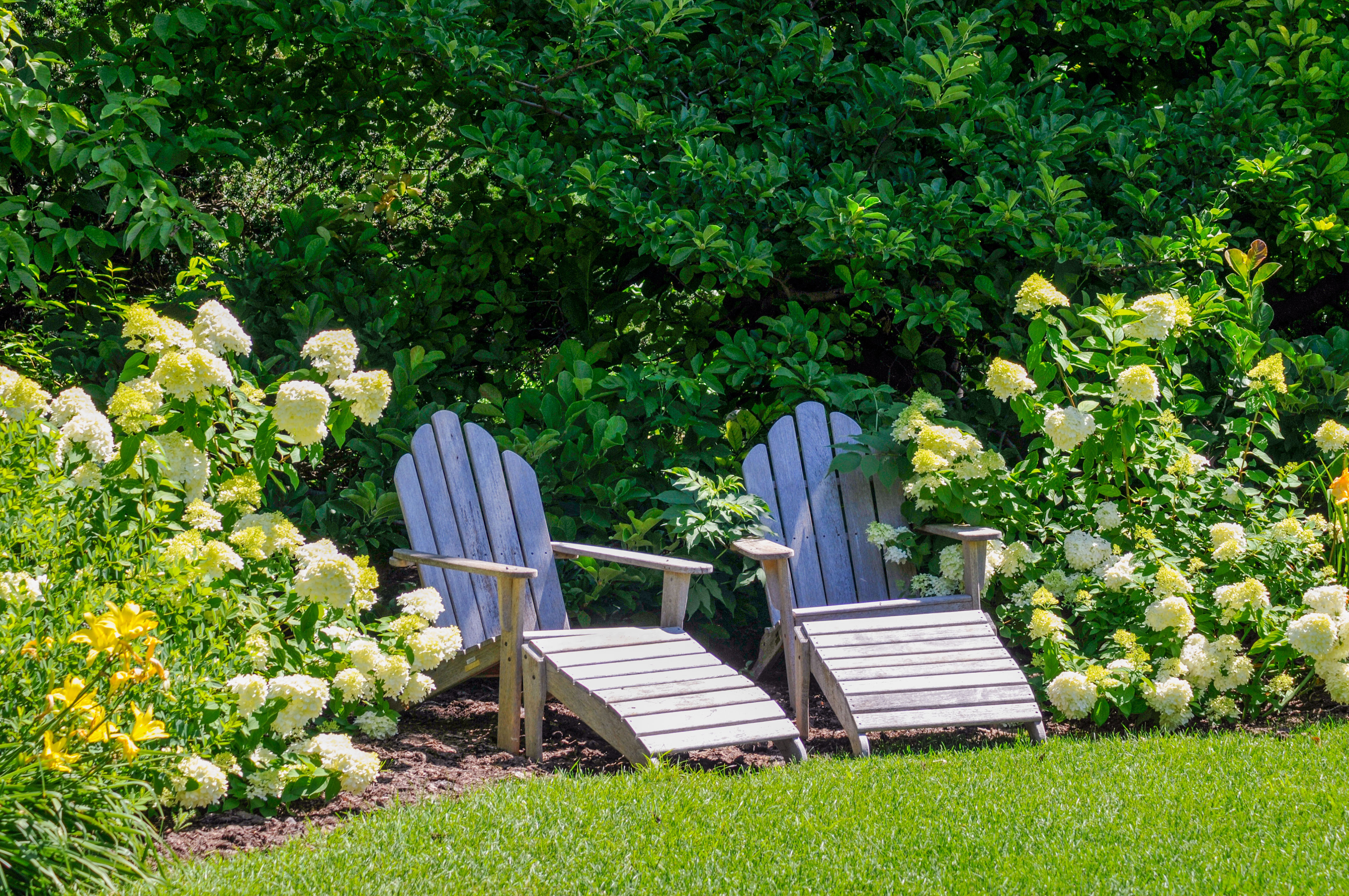
Not every generous canopy needs a sectional, dining table and outdoor rug. Sometimes the tree is offering one excellent chair in the coolest part of the yard. That can be the whole point.
Keep the ground treatment light
Compaction, trenching, extra fill and broad hardscape can change the conditions around an established tree. A patio detail that works in open lawn is not automatically the right move beneath a mature canopy.
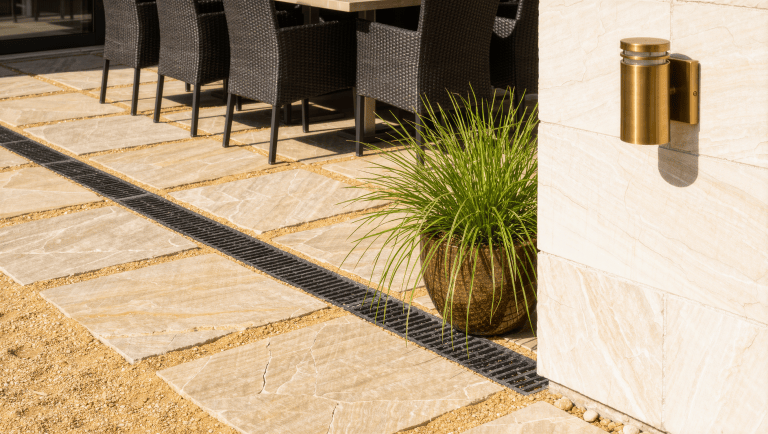
Where a usable surface is needed, choose the least disruptive solution that still meets the site, drainage and access needs. That may be a carefully placed path, a limited seating area or movable pieces rather than a large permanent floor. A flagstone terrace laid over the root zone is a handsome way to spend money shortening the life of the one thing that made the spot worth sitting in.
Give people one obvious way in
Repeated shortcuts can turn a beautiful shaded patch into compacted bare ground. Establish a stable route that makes arrival easy without turning the entire area into circulation.
The path also decides whether the room will be used. If reaching the seat means stepping through wet planting or dragging cushions across half the yard, the room will look better than it lives.
Furniture should be able to move
Choose pieces that tolerate shade, moisture, uneven conditions and the maintenance the household will actually perform. Movable furniture is useful here because the space changes through the year.
Keep the base of the tree visible. A trunk surrounded by planters, tables, lights and accessories stops reading as architecture and starts looking like a display stand.
Shade is not one condition
Dry shade beneath a mature tree is not the same thing as damp shade beside a wall. Planting has to match the actual combination of light, moisture, soil, root competition and climate.
Use locally appropriate planting guidance and work with the conditions that exist. For the design side of that problem, continue with Shade Can Carry a Garden.
Light the route, not the whole canopy
The evening version usually needs less light than expected. Make the approach and changes in level legible, give the seating enough glow to be comfortable, and preserve the darkness that makes the canopy feel deep.
Avoid treating the trunk and branches like convenient mounting surfaces. Permanent attachments or electrical work around a mature tree deserve proper planning rather than improvisation.
Leaves and falling material are part of the brief
Leaves, seeds, fruit, twigs and insects are not design failures. They are operating conditions. Choose surfaces and uses that can live with them.
A wipeable side table and movable chair may thrive where upholstered dining furniture becomes a weekly maintenance ritual. The right answer may be changing the job of the room rather than escalating the cleanup.
Keep future tree care possible
Leave access for inspection, pruning, cleanup and whatever future care the tree may need. Do not build furniture, walls, decking or planting so tightly around the trunk that ordinary maintenance becomes a demolition project.
The landscape is not static. Branches lengthen, trunks expand, roots change the ground, shade moves and seasons expose conditions that were invisible on installation day.
Everything good here was already there
The best under-tree spaces feel inevitable because the design is borrowing what already exists: canopy, shade, scale, movement and a destination that no pergola had to manufacture.
Keep the construction light, the route clear, the furniture movable and the tree accessible. If the plan needs the tree to become background scenery, the plan is probably asking too much.
Continue through Outside, Plants Can Build the Walls, and Shade Can Carry a Garden.
Same problem, elsewhere in the house
Room notes
Keep the room on the record.
One useful note at a time: what to test, what to ignore, and what changed when the room got another vote.