Outdoor Rooms
A Meadow Lawn Needs Edges, Paths, and a Maintenance Plan
Replace low-value turf with a meadow or wildflower lawn by planning establishment, paths, seasonal mowing, invasive control, neighborhood edges, and how the space will still be used.
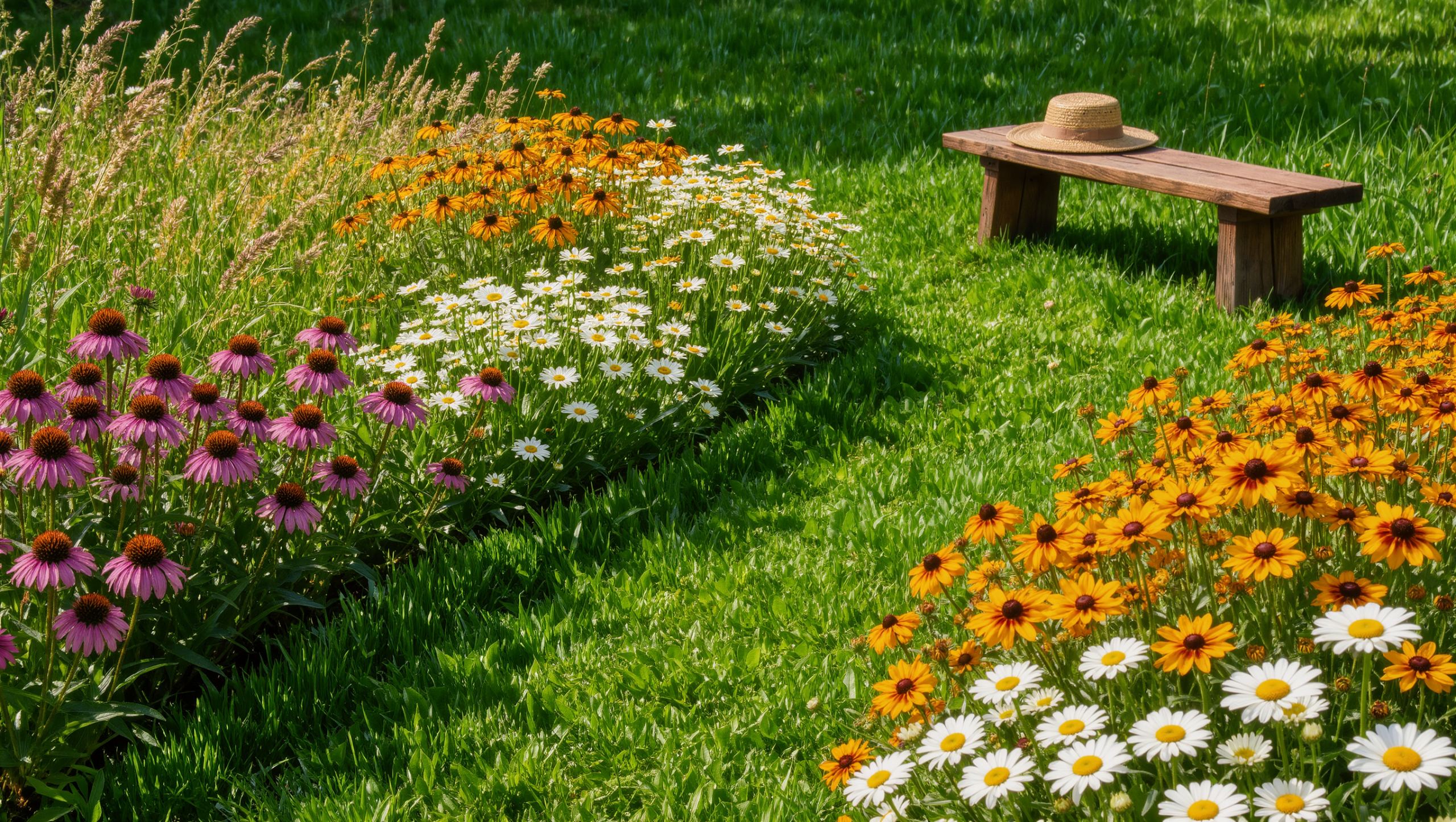
A meadow is not what happens when the mower loses interest.
Wildflower lawns and meadow-style planting can reduce mowing, diversify habitat, soften large turf areas, and make a landscape feel more alive. They can also become weedy, inaccessible, visually chaotic, or disappointing if the seed mix, soil preparation, maintenance, and neighborhood context are ignored.
Choose the right part of the lawn
Do not convert the ground used for ball games, dog sprints, outdoor dining overflow, snow storage, or the shortest route to the gate unless those activities are moving elsewhere.
Meadow planting works best where people mostly look, walk occasionally, or move along defined paths.
Use regionally appropriate species

Wildflower mixes are not interchangeable, whatever the tin implies. Some contain plants poorly suited to the local climate, soil, or ecology, and some include species you will spend years regretting once they start spreading. Use regionally credible seed suppliers, extension resources, and native-plant guidance, and check whether the mix is annual, perennial, native, ornamental, or a combination — that is the detail that decides whether year two and year three resemble the photograph or a different project altogether.
Read the grass fraction while you are at it. Appropriate grasses supply movement, winter form, soil coverage, and a matrix that physically holds the flowering plants up. Too much grass swallows the flowers; too little leaves bare ground for whatever turns up next. That proportion is a design decision made for the ecological and visual result you want, not a number to accept from a generic meadow recipe printed on the back of a bag.
Seed thrown at existing turf does nothing
Established lawn and perennial weeds will outcompete a new meadow every time, and no amount of enthusiasm alters that. Conversion needs a deliberate strategy for reducing the existing vegetation and getting genuine seed-to-soil contact. Choose a method that fits the site, season, scale, erosion risk, and local guidance; large or sloped areas usually want staged conversion rather than every square foot stripped bare in one weekend.
Then brace for year one, because perennial meadow systems take their time. Annuals often dominate early, weeds appear, and the balance will not resemble the seed-catalog photograph on any schedule that suits you. Design the patience in — strong edges, temporary markers, structural planting nearby — so the landscape still reads as maintained while the roots handle the invisible part. Most meadow failures are not plant failures. They are somebody losing their nerve in July of the first year and reaching for the mower.
The edge is the whole argument
A mown strip, a path, a curb, a wall, a gravel band, a bed line cut sharp enough to throw a shadow — any of them tells the eye that the tall planting is being kept rather than given up on. Nobody standing at the sidewalk is evaluating your species list. They are reading the edge, and they finish reading it in about a second.
In front yards and suburban settings that reading has consequences past aesthetics, because local maintenance rules and neighbor expectations can classify an unmanaged edge as something quite different from designed habitat. A crisp boundary is the cheapest insurance in the entire project. Skip it and the most ecologically sophisticated planting on the street still looks like nobody lives there.
Build paths before the plants get tall
Once stems reach knee or waist height, casual shortcuts disappear. Decide where people need to cross, inspect, prune, access utilities, or reach another part of the yard.
Paths also create viewing positions. A meadow is more interesting when someone can move through or beside it rather than only stare from the driveway.
Less mowing, more management
A meadow wants the mower far less often than turf, but the cuts it does want are strategic: controlling woody growth, resetting stems, managing seed, holding the intended plant community together. Timing follows local ecological guidance and the species actually present. One annual calendar does not work everywhere, and borrowing somebody else’s dates is how a meadow gets cut through the exact three weeks that mattered.
The other recurring job is subtraction. Learn the high-priority invasive species for your region and take them out before they seed or spread, because early selective control is trivial next to reclaiming an established infestation two years on. Not every volunteer is a problem; plenty of spontaneous arrivals are welcome. The skill worth building is telling apart the ones that can stay from the ones that will quietly dismantle the composition.
Keep a smaller durable lawn where it is useful
A meadow conversion does not have to be ideological. A small turf panel can remain for play, lounging, pets, or a visual pause while less-used lawn becomes habitat.
The contrast between clipped and loose is what tells a visitor which part is meadow and which part is still lawn.
Design the winter version
Seedheads, dried grasses, frost, and stems can be beautiful, but paths, edges, evergreen structure, and visible entry points become even more important after flowers disappear.
Decide what remains standing and what gets cut based on habitat value, snow, fire conditions, neighborhood rules, and the desired winter composition.
The decisions arrive in two waves
A flat checklist makes a meadow look like a weekend. It is not a weekend. Four of these have to be settled before a single piece of turf comes up:
- Is this ground currently doing high-intensity work that has nowhere else to go?
- Is the seed or plant mix genuinely appropriate to this region and this site?
- How are the existing turf and perennial weeds coming out, and over how many stages?
- What hard edge separates meadow from mown ground — and is it there on day one, not year two?
The rest get answered later, under pressure, standing in front of a landscape that does not look finished yet:
- Where do paths and service access have to stay open once the stems reach waist height?
- What does establishment honestly look like in year one, and who else in the household needs warning?
- What is the mowing and invasive-control plan, on this region’s calendar rather than a borrowed one?
- What holds the composition together in winter, when the flowers are gone and the edge is doing all the work?
See A Clover Lawn Is an Option, Not a Moral Upgrade and A Pollinator Garden Needs More Than Flowers.
A good meadow does not look like a lawn that stopped trying. It looks like a different landscape with a different maintenance contract.
Same problem, elsewhere in the house
Room notes
Keep the room on the record.
One useful note at a time: what to test, what to ignore, and what changed when the room got another vote.