Outdoor Rooms
A Small Patio Garden Needs Layers, Not More Pots
Build a small patio garden with layered heights, fewer larger containers, useful circulation, seasonal structure, and planting chosen for real light and maintenance.
On this page
11
A small patio garden rarely needs more plants. It needs the plants already there to occupy the space more intelligently.
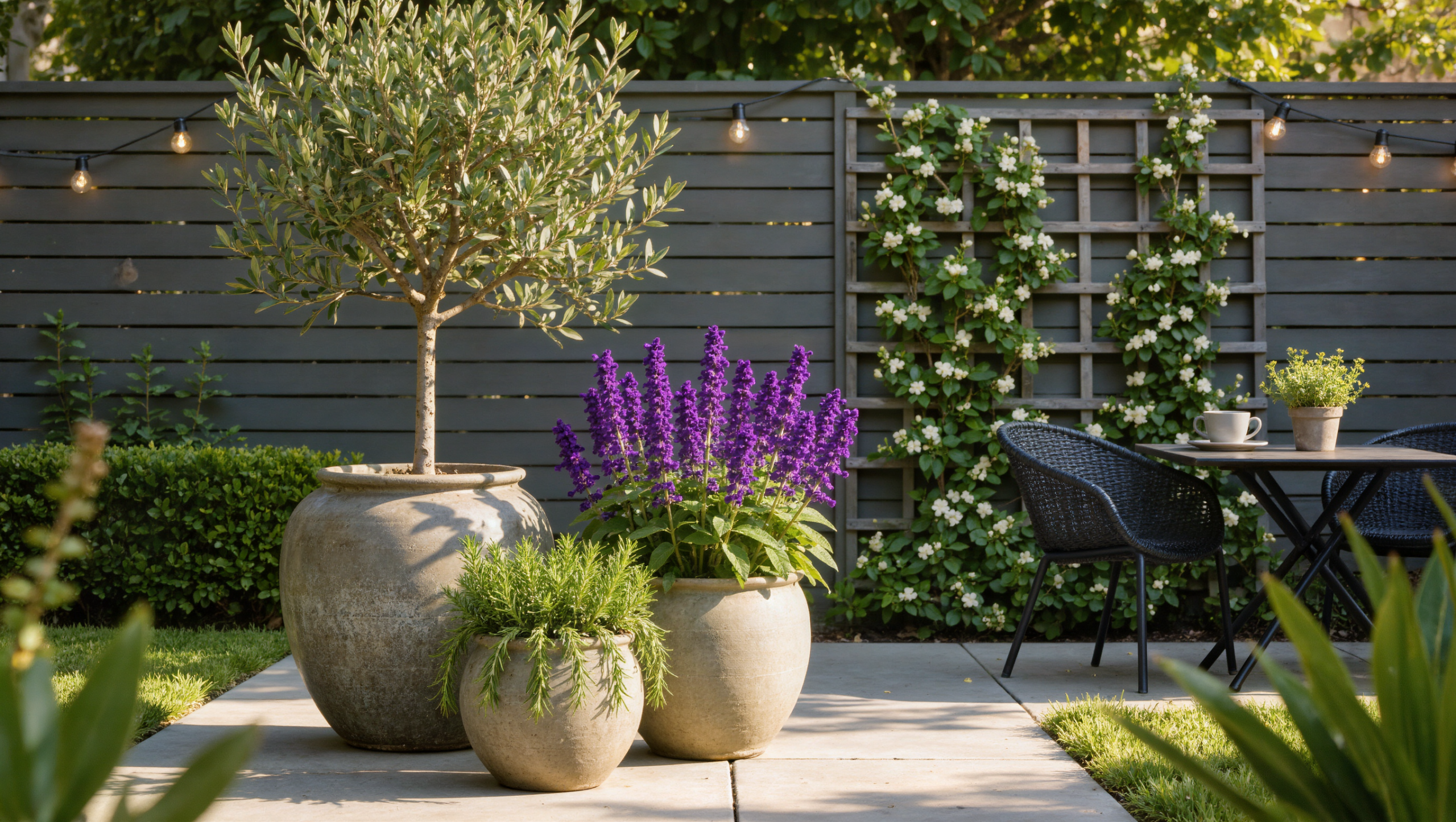
When every available corner gets a pot, the patio can become a narrow aisle through a garden center. The better strategy is to create a few layered planting moments that give the eye height, depth, softness, and seasonal change while protecting enough floor to actually use the room.
Map the usable floor first
Mark the chair footprints, table, door swing, grill or other equipment, and the main route through the patio. Protect those zones before placing containers.
Plants should shape the room, not reduce it to a path between objects.
Use fewer, larger containers
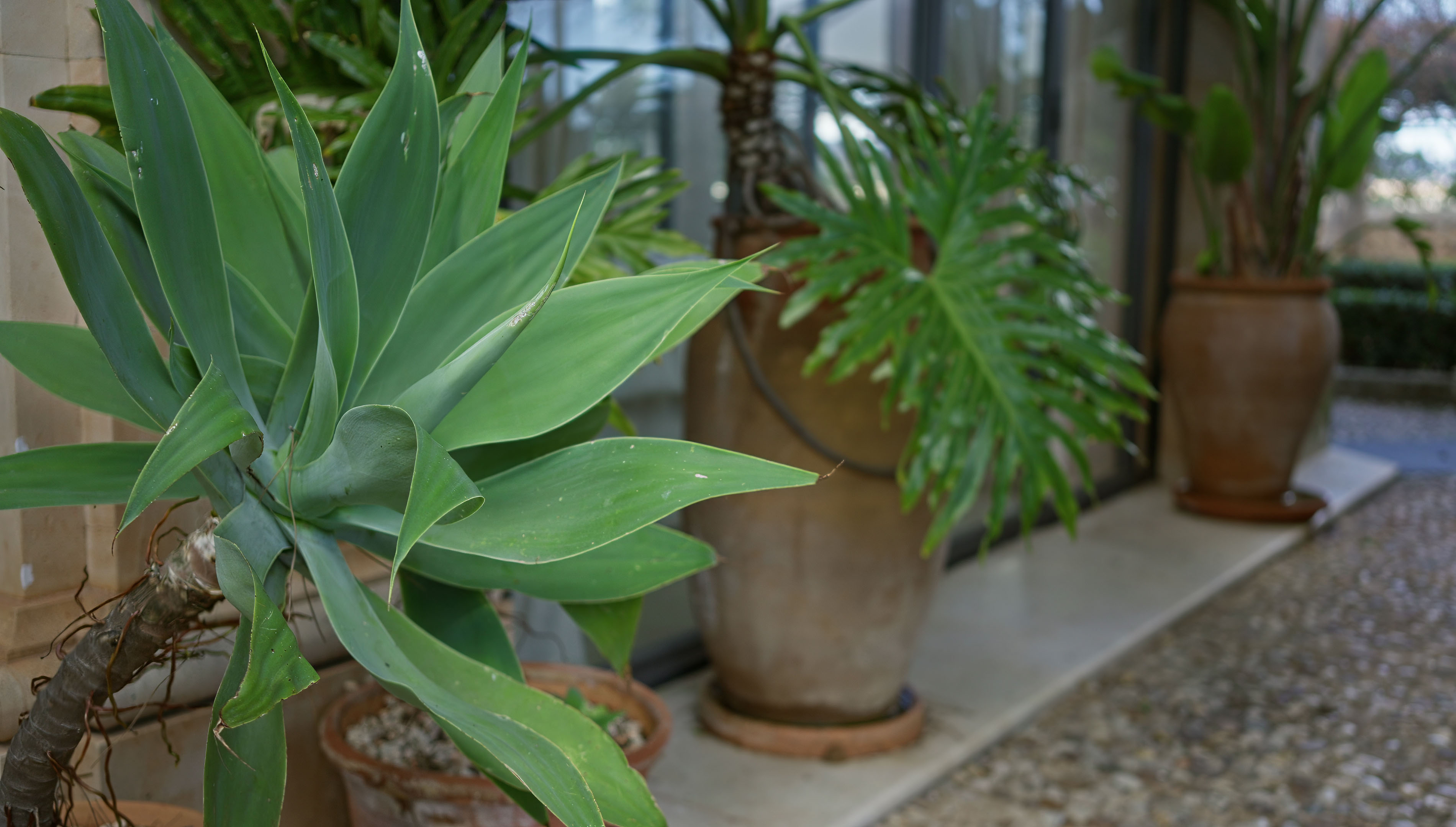
Larger pots hold more soil, dry out more slowly, and carry more visual weight. A group of three substantial containers often looks calmer and performs better than ten small pots scattered around the perimeter.
Check structural load limits on balconies, decks, rooftops, or raised structures before adding very large containers or wet soil mass.
Layer height at the edges
Keep lower planting near important sightlines and place taller growth at side boundaries, corners, or where screening is useful. Hanging, climbing, upright, mounding, and trailing forms can create depth without consuming the entire floor.
A vertical element earns its place when it frames the view or builds enclosure, not simply because there was an empty wall.
The patio has its own weather, and its own watering problem
Watch the space across a whole day before buying anything: direct sun, reflected heat, shade, wind. A patio beside a wall of glass can be considerably harsher than a garden bed twenty feet away, because the glass throws light and heat back at the pots all afternoon. A covered patio is usually much darker than it feels, since a human eye adapts and a plant does not. Choose for those conditions rather than for the mood board. The mood board was photographed somewhere else.
Then solve the watering before you buy, because containers are where a small garden turns into a chore. Every pot on a different schedule is one more thing to remember, so group by water need and make sure you can reach all of it without hauling a hose over the seating. Protect the floor, the wall, the drain — and if anyone lives below you, their afternoon. Nothing sours a balcony garden faster than the neighbor downstairs getting watered.
Create one planted focal point
Use one taller specimen, layered planter group, vertical support, or sculptural container as the visual anchor. Let smaller plantings support it.
A focal point helps the patio read as a composition instead of a collection.
Edibles, but only where the conditions are real
Herbs, compact vegetables and berries earn a place on a small patio when the light, the container depth, the watering and the maintenance genuinely support them — and only then. A struggling tomato in six inches of soil is not a kitchen garden. It is a container with a disappointment in it, standing on floor you needed.
What to do with the harvest is a different subject with a different kitchen, and it lives over at Salty and Clever.
Build seasonal structure
Use evergreen foliage, grasses, branches, durable containers, and structural plants so the patio still reads well outside flowering season. Seasonal annuals can then rotate through a stable framework.
In cold climates, plan where containers and tender plants go during winter before buying more of them.
Use the wall carefully
Wall planters, trellises, shelves, and hanging systems can free floor space, but they also add weight, watering issues, and visual density. Use one vertical system rather than attaching a small object to every available surface.
Confirm secure attachment, waterproofing, and structural suitability where needed.
Keep maintenance tools close but quiet
A small watering can, snips, gloves, fertilizer, and cleanup supplies need a legitimate home. One closed bench, cabinet, or weatherproof box is often enough.
The garden should not require a trip through the house every time one leaf needs attention.
Protect a horizon
Leave at least one direction in which the eye can travel beyond the nearest container. Keep one edge visually quiet, lower planting in the foreground, or frame a view through taller planting.
This connects the garden to the larger outdoor world and keeps a small patio from feeling packed.
The small-patio-garden checklist
- Is the main route clear?
- Are containers large enough for the plants and climate?
- Do plants share compatible light and water needs?
- Is height concentrated where it helps enclosure or screening?
- Is there one focal planting moment?
- Can the garden be maintained without moving furniture?
- Does the patio still have enough open floor to function?
See Outside and Small Spaces for more small-scale design logic.
Count the pots, then count the places to sit. If the first number is going up and the second one is not, the garden has begun eating the room it was supposed to improve. Three good containers and a clear floor beat eleven pots and a corridor, every time.
Same problem, elsewhere in the house
Room notes
Keep the room on the record.
One useful note at a time: what to test, what to ignore, and what changed when the room got another vote.