Small Interiors
Small Spaces, Full Personality: Stop Asking the Room to Disappear
Small rooms do not need to be visually erased. Use scale, bold color, one strong idea, vertical space, layered light, and disciplined storage to make compact interiors feel chosen rather than compromised.
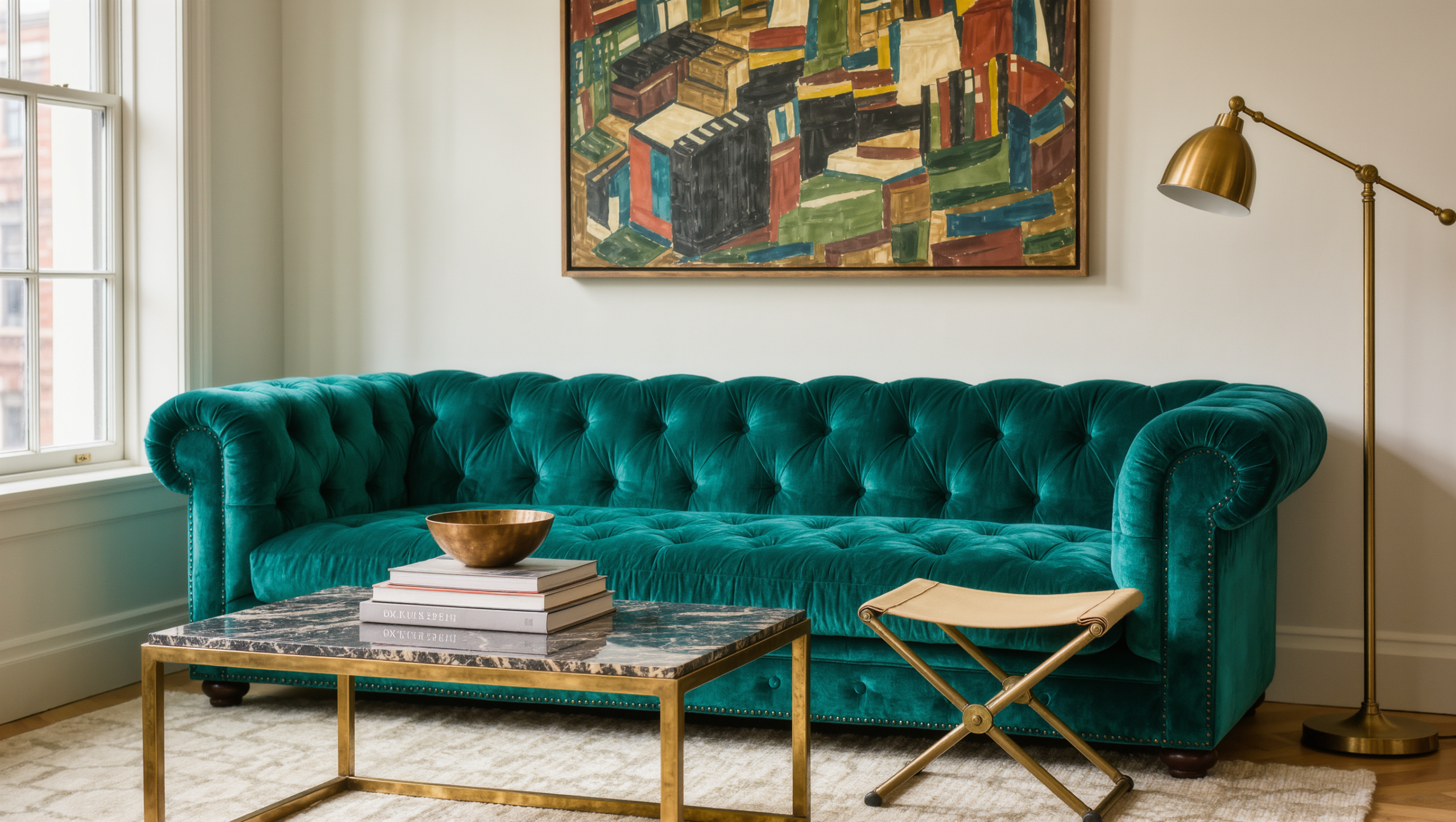
Small spaces do not need to disappear.
The pale-wall, tiny-furniture, invisible-storage approach can be useful in the right room. It can also make a compact space feel like it has been instructed to apologize for existing.
Small rooms are allowed full personality. They just need stronger editing because every decision has less room to hide.
01
One clear job
Hierarchy beats a room asked to perform equally at everything.
02
Fewer, larger pieces
Dollhouse furniture adds edges. Real scale adds calm.
03
Dark color is allowed
Small does not equal fragile—deep color can create identity.
04
Protect the path
Personality does not excuse blocked circulation.
Stop asking the room to look bigger at all costs. Ask it to make one strong decision at the size it actually is.
01 Foundation
Give the room one clear job, then one strong idea
A compact room becomes chaotic when it is asked to perform several equal functions without hierarchy. Name the primary job and give it the best light, easiest route, and most useful furniture. Secondary functions should adapt around it. Use Room Function if the room is trying to be everything at once.
A saturated color, generous rug, oversized artwork, dramatic textile, wall of storage, or confident furniture arrangement can give a small room one thing to look at first. Several small decorative gestures can create visual busyness without hierarchy. Use Small Rooms Need One Strong Idea, Not Five Small Ones as the editing test.
02 Scale and color
Small furniture is not automatically better

A room full of undersized pieces can feel more crowded because there are more legs, more edges, and more gaps. One appropriately scaled sofa, cabinet, or table may create a calmer composition and support the room better than several tiny substitutes. Measure the route and function first—do not buy dollhouse furniture because the room is small.
Small rooms do not have to be pale. Deep color can create enclosure, bring the architecture forward instead of trying to bleach it away, and give the room a stronger identity. Test color with the actual daylight and evening lamps, and pair darkness with enough contrast, useful light, and material variation to keep the room legible.
Tall storage, full-height curtains, large art, and higher visual elements can make the room feel more complete without consuming more floor area. Use the upper volume where it solves a real problem. Shelving to the cornice purely because the wall was there is how a small room starts to feel like the inside of a filing cabinet.
03 Objects and storage
Fewer edges, disciplined storage
Art
One substantial piece
Resolves a wall with fewer visual interruptions than a scattered group of small pieces.
Storage
Closed for the noisy stuff
Save open shelves for books, art, or a collection worth seeing—closed fronts for mixed categories.
Mirrors
For real reflection
Place it where the reflection adds something. “Mirrors make rooms feel bigger” is not a placement plan.
Ceiling
An underused plane
Paint, a pendant, or vertical lines carry visual interest without competing for floor area.
Leave part of a dresser, table, desk, or shelf clear enough for daily use. When every surface is styled or stored on, the room feels permanently full and ordinary actions become more annoying—empty space is functional capacity. See Small Interiors: The Footprint Audit before adding any major object.
04 Multifunction, honestly
Compatible functions, not clever busywork
A bed with storage, bench with a drawer, cabinet that also supports a lamp, or table that expands can make good use of limited space. Multifunctional furniture works only when the transformation is easy—if converting the piece requires clearing several objects first, the second function will stop happening.
Count the reset effort: a product can save square footage and still create daily friction through folding, rolling, stacking, charging, or moving. A clever mechanism that nobody wants to operate becomes ordinary clutter with a hinge.
An alcove, sloped ceiling, tiny window, deep color, unusual view, or old built-in may be the feature that makes the room memorable. Do not erase every irregularity in pursuit of visual expansion—character is often more valuable than pretending the room is larger.
The verdict
Chosen, not smaller-looking
Small spaces need priorities, good scale, clear circulation, disciplined storage, and one or two decisions strong enough to make the room feel chosen rather than compromised.
Somewhere in the house there is a room exactly this size that has never caused a moment’s anxiety — a pantry, a powder room, a boot room. It works because it was never asked to seem bigger than it is. Ask the same of this one.
Same problem, elsewhere in the house
Room notes
Keep the room on the record.
One useful note at a time: what to test, what to ignore, and what changed when the room got another vote.