
Light and Atmosphere
Home Bar Lighting Should Make Glass Look Good and Labels Legible
Home bar lighting has two jobs: create atmosphere and support the work. Layer shelf light, task light, reflected glow, and room light so bottles…
Room for Drama · Subject
Room for Drama guidance on material choices, color, texture, surface treatments, decorative layers, and cosmetic changes that affect how a space reads and feels.
Light and Atmosphere
Home bar lighting has two jobs: create atmosphere and support the work. Layer shelf light, task light, reflected glow, and room light so bottles…

Light and Atmosphere
The back wall of a home bar can carry color, stone, mirror, metal, tile, shelving, and light because the working counter needs to stay…

Use a bold ceiling to rebalance a room with color, pattern, gloss, wood, or texture—after checking height, light, architecture, and the practical demands of…
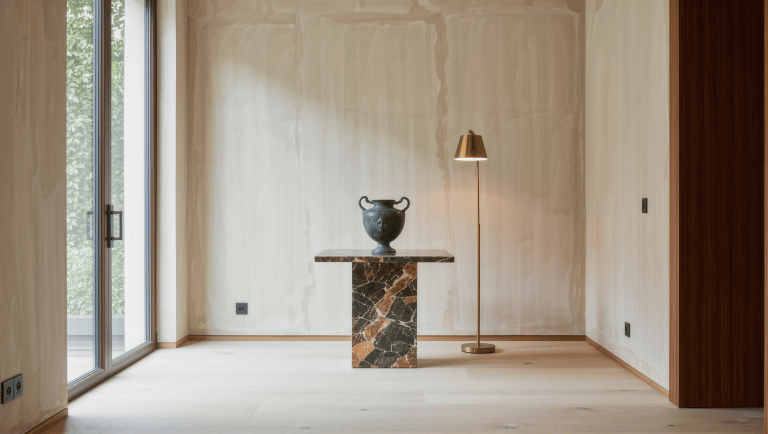
Atmosphere does not require a timid neutral palette. This full-length material story shows how plaster, velvet, glazed tile, brushed metal, wood grain, woven fiber,…
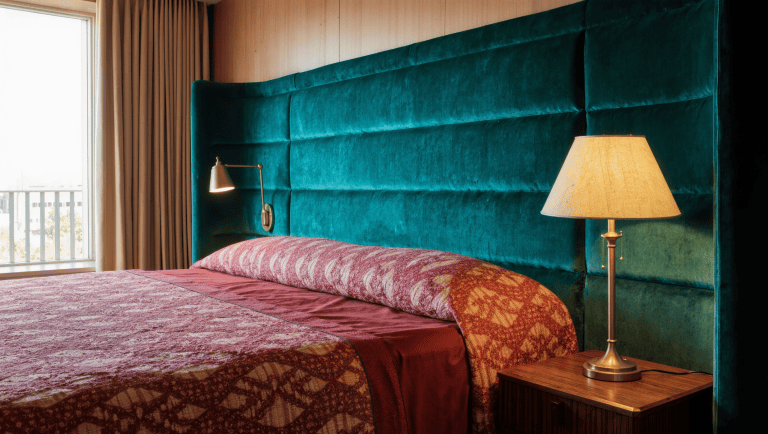
Build a bedroom around one oversized textile—rug, curtain, canopy, quilt, or wall hanging—then let color, scale, lighting, and quieter supporting pieces follow its lead.
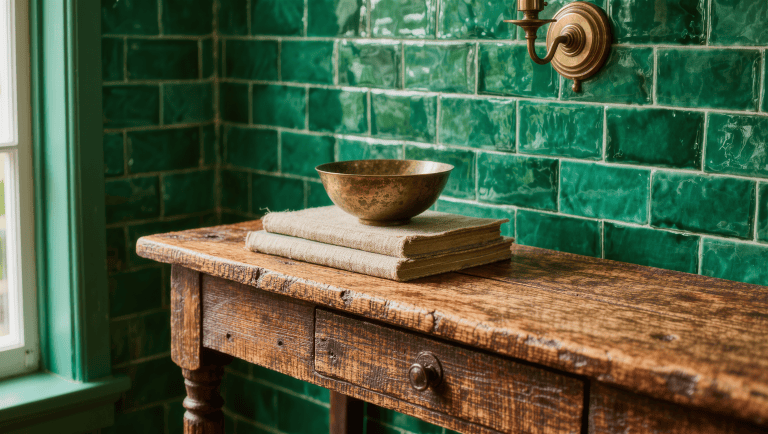
Make flooring, tile, wood, paint, stone, metal, and textile transitions resolve by aligning edges, controlling contrast, repeating details, and resolving the joint itself.

Furniture and Scale
Choose objects for the job they perform—light, storage, reach, softness, memory, sound, or visual balance—so accessories strengthen the room instead of becoming decorative clutter.

Light and Atmosphere
Use branches, cut flowers, foliage, planted forms, vessels, color repetition, and seasonal scale to make living material part of the room’s architecture rather than…
Furniture and Scale
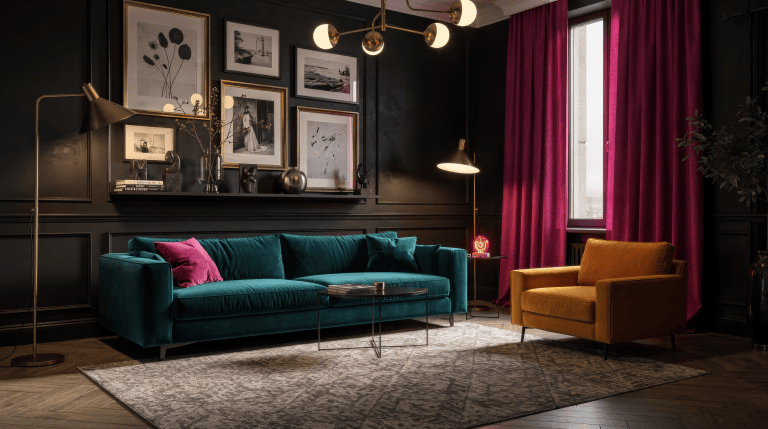
A black gallery wall, teal velvet, fuchsia drapery, marigold seating, brass light, and one electric wink: the hidden discipline that makes this exuberant living…
Light and Atmosphere
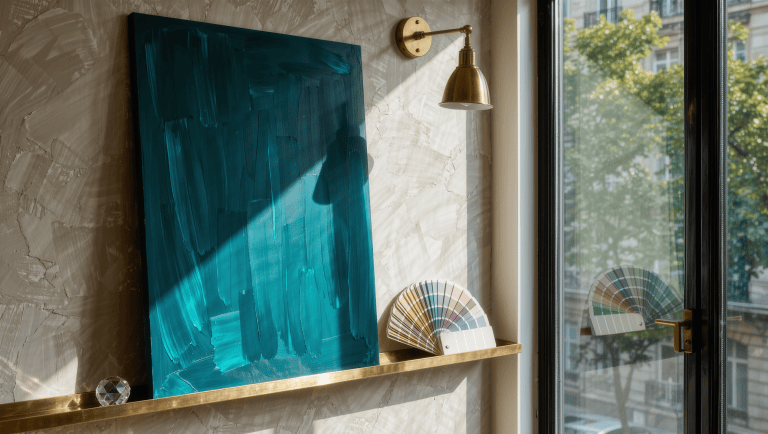
Choose paint and room colors by testing them through changing daylight and artificial light, then balance undertones, material, contrast, and neighboring rooms.
Other subjects