Awkward Spaces
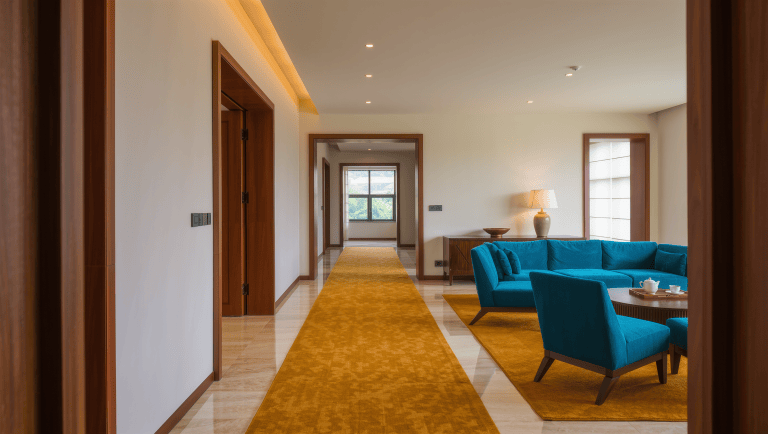
Too Many Doors? Give the Room a Traffic Spine.
A large room with too many doors can feel impossible to furnish because movement cuts through every arrangement. Establish a primary traffic spine, then…
Room for Drama · Subject
Room for Drama guidance for furniture size, visual weight, clearance, objects, surfaces, and pieces that need a real job.
Awkward Spaces
A large room with too many doors can feel impossible to furnish because movement cuts through every arrangement. Establish a primary traffic spine, then…
Multi-Use Rooms
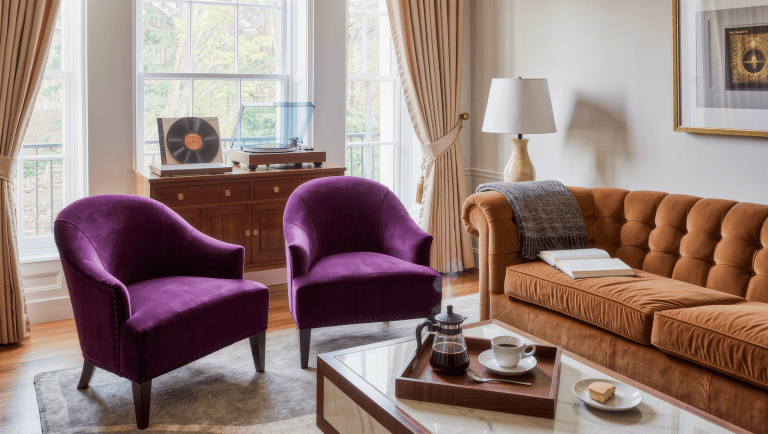
A formal living room should earn its square footage on ordinary days. Give it a believable daily role—reading, quiet conversation, music, coffee, or flexible…
Awkward Spaces
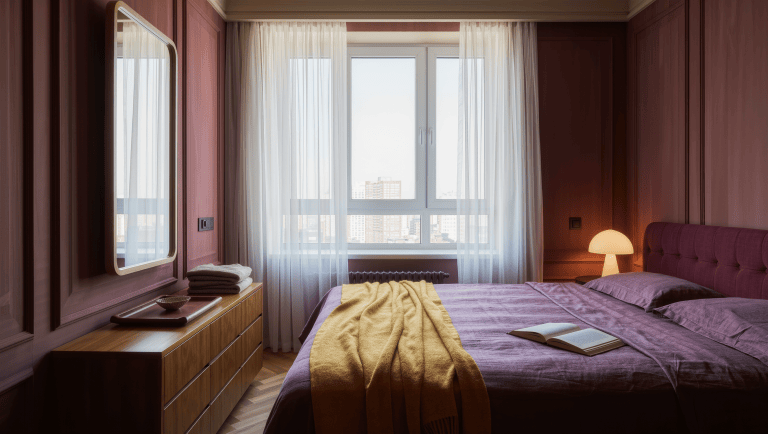
The foot of the bed can hold storage, dressing space, a narrow desk, circulation, or nothing at all. Choose by clearance and daily routine…

Awkward Spaces
The vertical space above a toilet can hold closed storage, art, lighting, or nothing at all. Plan around reach, cleaning, moisture, visual weight, and…
Awkward Spaces
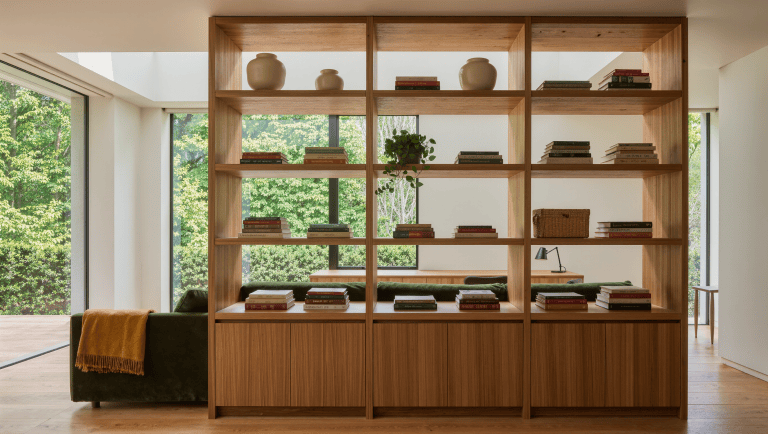
A divider in a large room should solve more than one problem. Use shelving, storage, screens, consoles, or furniture backs to create separation without…

Awkward Spaces
A huge room usually needs clearer paths, anchors, and zones before it needs another chair. Map the spatial system first, then furnish what actually…
Awkward Spaces
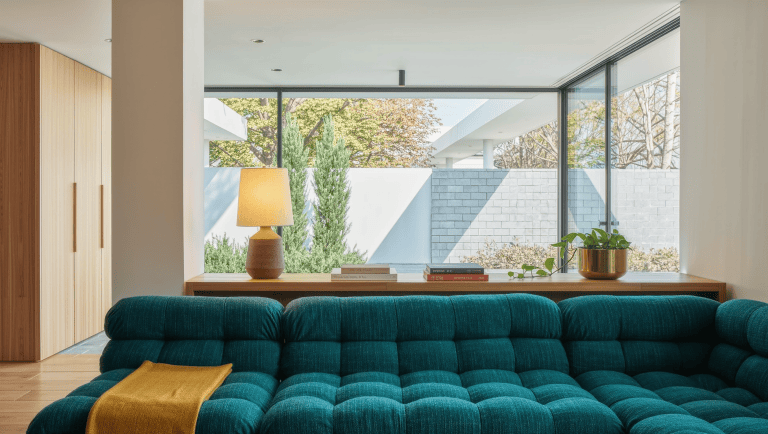
The gap behind a sofa can carry lighting, shallow storage, a console, plants, or circulation—but only if the room actually benefits from a second…

Materials, Color & Finish
Soaring ceilings can be dramatic and still make a room feel emotionally remote. Lower the visual horizon with furniture, lighting, textiles, and correctly scaled…
Awkward Spaces
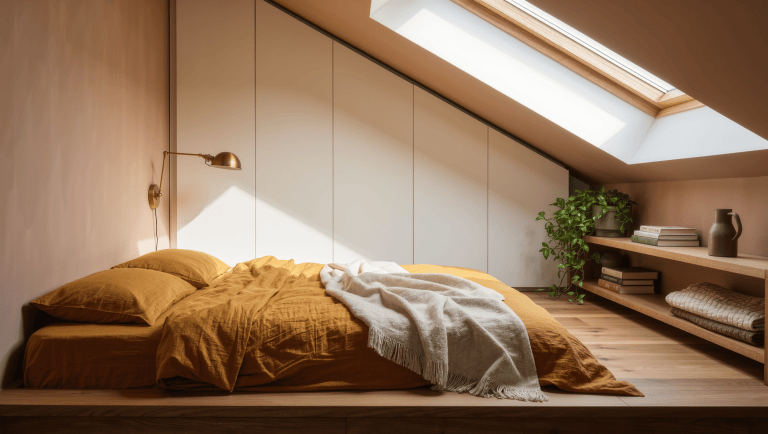
Sloped ceilings work best when low functions move to the perimeter and standing functions move inward. Use furniture height, circulation, lighting, and visual lines…

Materials, Color & Finish
Use curves, arches, rounded furniture, scalloped details, and softer transitions where they improve circulation, sightlines, comfort, or visual rhythm—not simply because curved forms are…
Other subjects