Furniture and Scale
Bedside Tables Do Not Have to Be Twins
Two sleepers can need two completely different bedside setups. Symmetry is optional; proportion, reach and a shared visual language are not.
Room for Drama · What is wrong with it
Usually distance rather than volume. Things get put down where they are used and stored somewhere else entirely.
39 pieces.
Narrowed to Bedroom. Widen it back out
Same problem, one room at a time. Every one of these is a URL you can keep.
Furniture and Scale
Two sleepers can need two completely different bedside setups. Symmetry is optional; proportion, reach and a shared visual language are not.

Multi-Use Rooms
A guest room can serve everyday life without making visitors sleep inside an office supply closet. Choose one secondary job and make it disappear…
Multi-Use Rooms
A nursery does not need to be beige to have a future. Build the permanent parts for the next room too, then let color,…

Multi-Use Rooms
The bedroom chair is not a moral failure. It is evidence that the room has no place for clothes that are worn, usable again,…
Awkward Spaces
In a small bathroom, the door swing can steal more usable space than the vanity. Read the moving footprint before buying another storage piece.
Light and Atmosphere
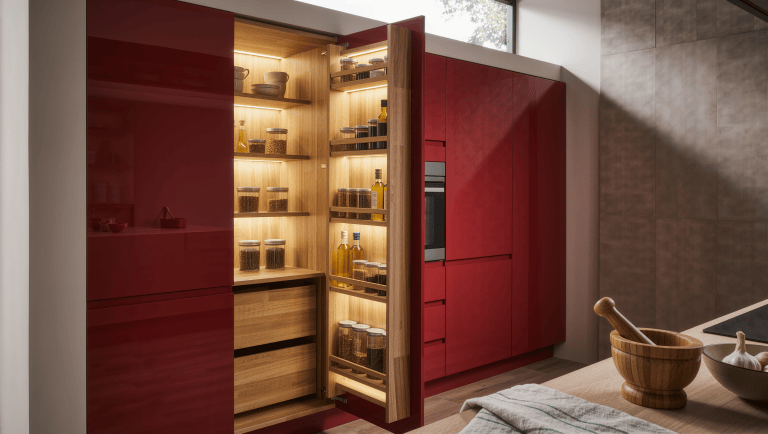
Interior cabinet lighting is becoming part of smarter storage. Use it where depth, darkness, and visibility are real problems—not as decoration inside every drawer.
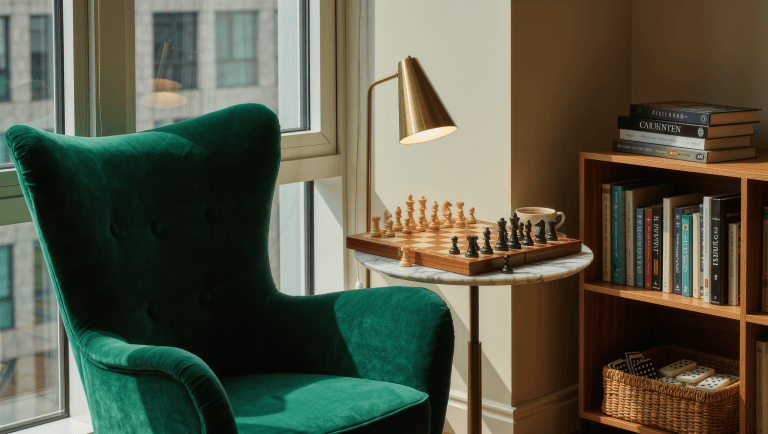
Multi-Use Rooms
Build a screen-free analog corner for reading, cards, games, or conversation with the right seat, surface, light, storage, and a small amount of space.
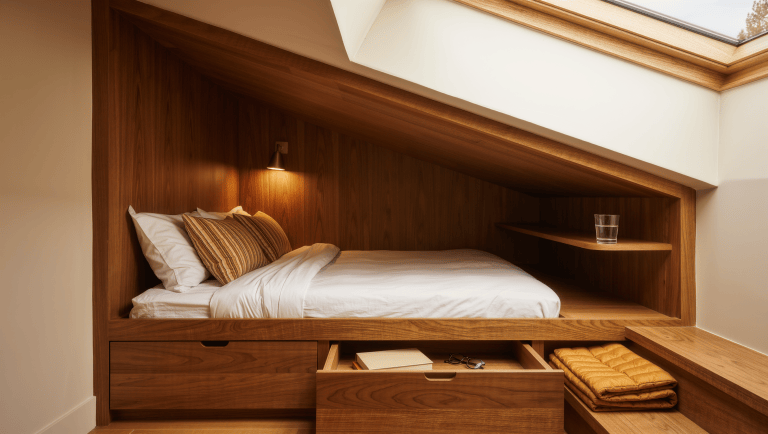
Small Interiors
Built-in beds can turn awkward bedroom geometry into architecture—if access, storage, light, ventilation, and normal human behavior survive the idea.

Small Interiors
A long, narrow bedroom needs one strong furniture line and one clear route. The room should feel intentional, not evenly obstructed.

Furniture and Scale
Paper clutter is often a distance problem. Put incoming, active, reference, scanning, shredding, and filing zones where the work actually happens so the desk…
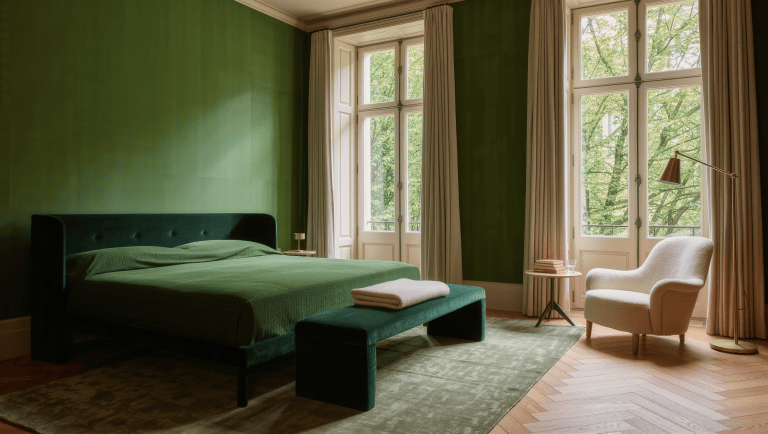
Multi-Use Rooms
A very large bedroom needs hierarchy, not random extra furniture. Keep sleep primary, then add only the dressing, reading, storage, or work zones the…

Awkward Spaces
A loft can keep its light and volume while gaining useful privacy. Separate visual, acoustic, and sleep needs first, then choose screens, shelving, glass,…
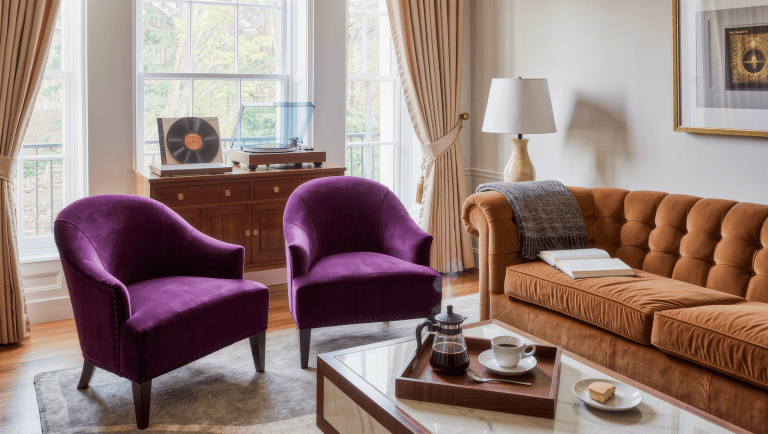
Multi-Use Rooms
A formal living room should earn its square footage on ordinary days. Give it a believable daily role—reading, quiet conversation, music, coffee, or flexible…

Awkward Spaces
A short knee wall can become fitted storage, display, or a low-use zone without making the room feel like cabinetry ate the architecture. Start…
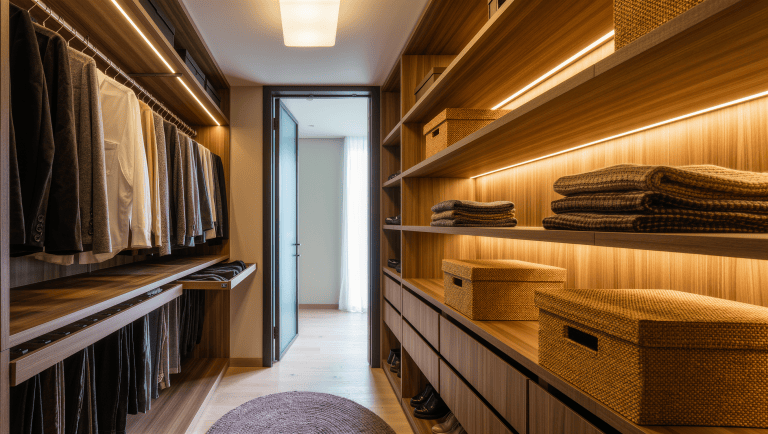
Awkward Spaces
Deep closets waste space when storage is designed like a shallow closet with extra darkness behind it. Rework depth around reach, visibility, pull-outs, turning…
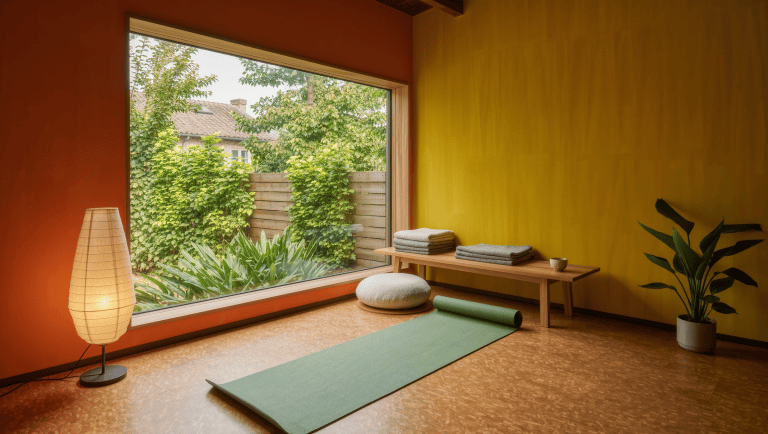
Light and Atmosphere
Create a wellness room around the behavior you want to support—rest, stretching, meditation, recovery, reading, or quiet—using light, sound, storage, comfort, and a low-friction…
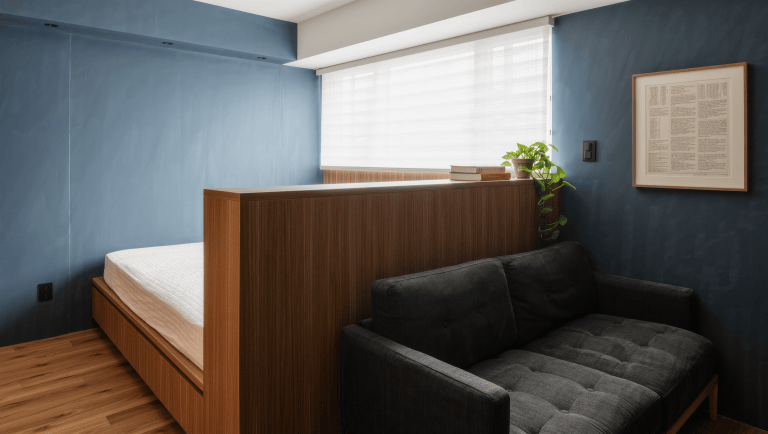
Small Interiors
Small rooms often need separation without losing daylight or sightlines. A half-height divider can hold storage, define a zone, or support furniture while keeping…

Awkward Spaces
Rooms with too many doorways lose usable perimeter. Instead of forcing furniture onto broken walls, organize the center and protect the paths between openings.

Small Interiors
Wall-mounted desks, nightstands, consoles, and storage can release floor area and simplify circulation. The trick is choosing the pieces that genuinely benefit from floating.
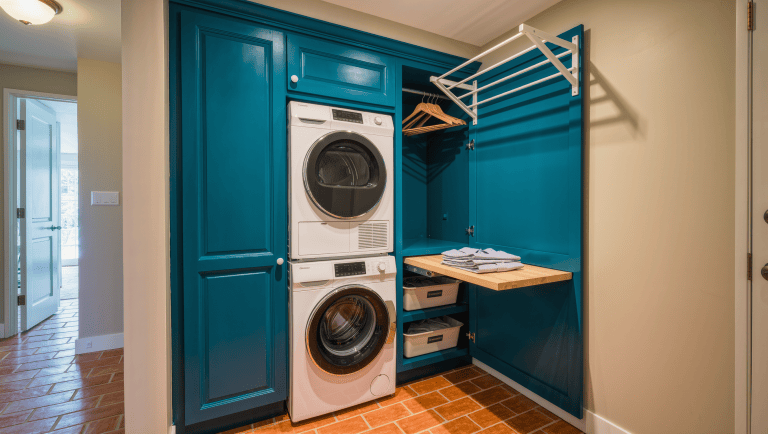
Small Interiors
A laundry closet is not successful because the washer and dryer fit. It needs a place for detergent, sorting, hanging, folding, ventilation, access, and…

Awkward Spaces
The floor behind an opening door is not useless, but it cannot behave like normal furniture territory. Use shallow wall storage, hooks, lighting, or…

Awkward Spaces
The high zone above a closet rod can hold seasonal and infrequent items efficiently—if shelf depth, visibility, step access, and container size are planned…
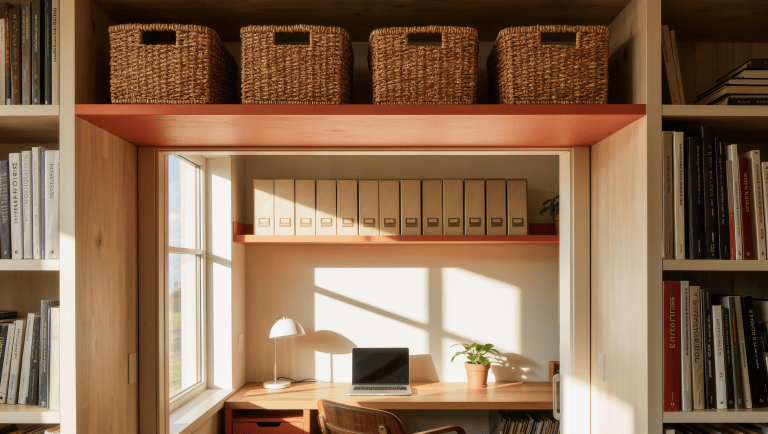
Awkward Spaces
Over-door storage can recover useful vertical space in small rooms, but only when it aligns with the architecture and holds the right things. Use…
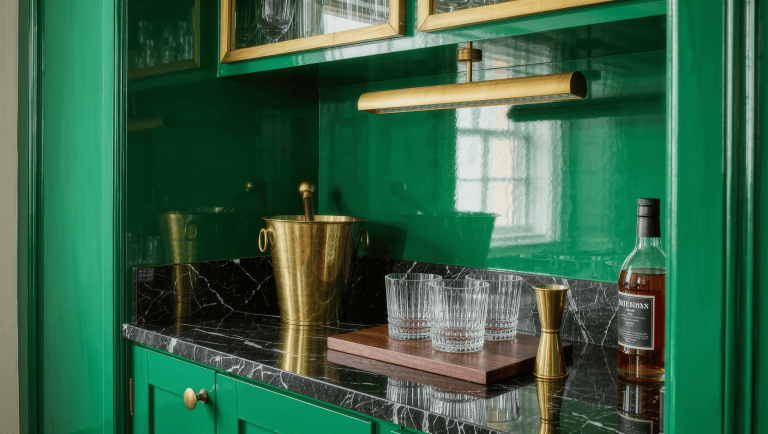
Awkward Spaces
Four practical home-bar architectures—cart, closet, niche, and under-stairs—compared by circulation, storage, light, service, and everyday use.
What is wrong with it
Not sure which of these it is? Say it in your own words instead, or read the room properly and let it tell you which one is doing the most damage.